

Welcome
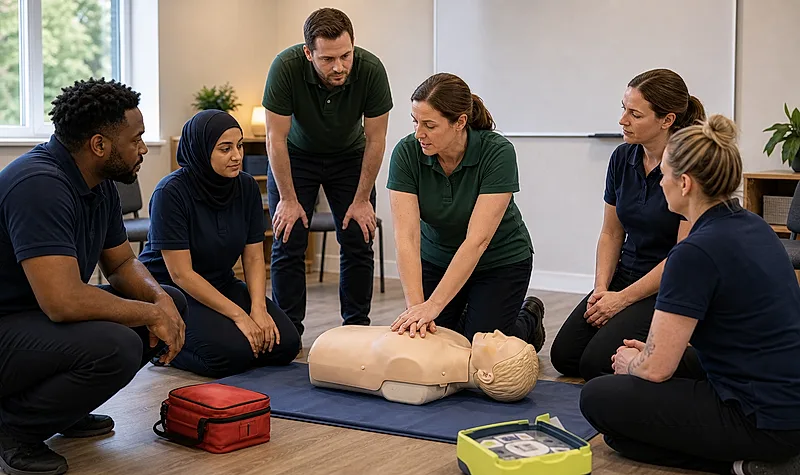
Medical emergencies in children's homes are uncommon but time-critical. A child may choke at mealtime, a young person may become unresponsive in a bedroom, a visitor may collapse in the lounge, or a staff member may need emergency help while on shift. In those first minutes the home's response must be calm, quick and practical.
This course is for residential child care workers, senior residential workers, support workers, waking night staff, team leaders, deputy managers, registered managers and other frontline workers in children's homes and residential child care settings. It is an awareness-level emergency first-aid course and does not replace accredited practical first-aid training, paediatric basic life support training, local emergency drills, nursing judgement, ambulance advice or emergency medical care.
This course is written for children's homes staff across the UK. It is based mainly on Resuscitation Council UK first-aid and resuscitation guidance, supported by NHS and HSE sources, with England children's homes context used where helpful. Wales, Scotland and Northern Ireland have their own residential care and regulatory frameworks, so staff must also follow local policy, emergency arrangements and procedures in their nation.
Why This Course Matters
- Emergencies rarely arrive neatly: staff may not know the cause in the first few seconds.
- Early action matters: calling 999, checking breathing and starting the correct response can save life.
- Children's homes are team settings: a safe response depends on clear role allocation, not one person doing everything.
- Many emergencies begin before collapse: severe breathing problems, seizures, low blood sugar, overdose and head injury require early recognition.
- Readiness matters before the event: plans, equipment, training and handover systems make the response work under pressure.
A Simple Emergency Spine
- Notice sudden change: collapse, confusion, severe pain, choking, abnormal breathing, fitting or unusual drowsiness all need attention.
- Think safety first: protect yourself, the child and others nearby.
- Check response and breathing: do not waste time waiting for certainty.
- Call 999 early: use speakerphone where possible.
- Start the right first response: CPR, AED, choking first aid, recovery position, rescue medicines or injury care as trained.
- Hand over and record clearly: note timings, symptoms, treatments and any change in condition.
This course will help you act more effectively in the first 5 to 10 minutes of an emergency, but practical hands-on training remains essential.
Rate this page
Sign up now for a free account
Course tools & details

