

Welcome
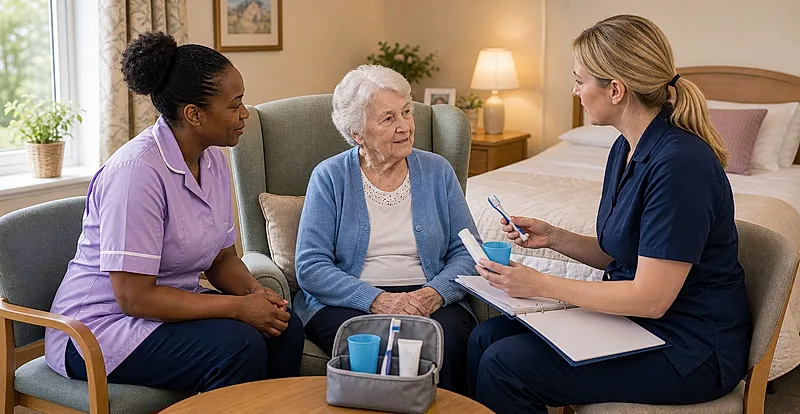
Mouth care can seem small, but in care homes it affects comfort, confidence and health. A sore mouth, dry mouth, broken tooth or poorly fitting denture can make eating, drinking, speaking, smiling, taking medicines and engaging with care harder.
This course is for care assistants, senior carers, support workers, team leaders, supervisors, night staff and other frontline care home staff in residential and nursing homes. It is a short frontline course on daily mouth care, early recognition and escalation. It does not replace dental diagnosis, dental treatment, specialist prescribing decisions or local competency requirements.
This is a UK-wide course. It uses NICE oral-health guidance and quality standards as the core clinical source, with England learning from CQC and Skills for Care where useful. Wales, Scotland and Northern Ireland share the same daily-care principles but have their own programmes, resources and local dental access arrangements, so staff must follow local policy as well as the core good practice covered here.
Why This Course Matters
- Mouth care is daily care: it should not wait for a dental crisis.
- Poor oral health causes avoidable distress: pain, dry mouth and sore dentures can change behaviour and reduce food and fluid intake.
- Small signs matter: weight loss, refusal of food or a hand to the cheek may indicate a mouth problem.
- Care plans matter: admission assessment and daily support must be clear and kept up to date.
- Escalation matters: residents need access to routine and urgent dental help when required.
Oral Care for Residents with Dementia (1 of 6)
Rate this page
Sign up now for a free account
Course tools & details

