

Welcome
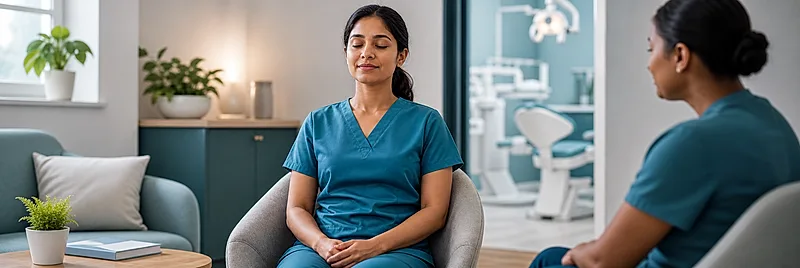
Dental nursing often produces physical tension. Long periods standing or leaning, repeated surgery turnarounds, decontamination tasks, difficult conversations and constant pressure to keep care safe can show up as a tight jaw, raised shoulders, shallow breathing, headaches or a sense of not fully unwinding. Progressive relaxation techniques help you spot that tension earlier and release some of it before it builds up.
This CPD course is for dental nurses working in practice and wider dental team settings. It supports GDC Development outcomes A and B by helping with communication, patient-centred care, professionalism, teamwork and managing pressure. Support routes differ across England, Scotland, Wales and Northern Ireland, so follow local workplace policy, local services and national pathways where relevant.
This course introduces practical relaxation techniques for self-management. It does not replace workplace action on unsafe pressure or clinical support for persistent distress, but it can help reduce physical tension and provide brief resets between demanding tasks.
Why This Course Matters
- Stress often lives in the body: tension, bracing and shallow breathing can appear before you notice stress mentally.
- Physical resets can be brief: a short shoulder, jaw or hand release may be realistic during a busy day.
- Relaxation supports communication: reducing physical arousal can make patient and team interactions steadier.
- Practice improves access: techniques become easier to use under pressure when you are familiar with them.
How This Course Will Help You
After completing this course you should be able to recognise physical stress responses, use short PMR-style techniques, apply guided imagery or visualisation, and choose quick relaxation resets that fit dental nursing work.
Is this the right stress management course for you? We have many others for dental nurses, covering different techniques. Click here for more info.
Rate this page
Sign up now for a free account
Course tools & details

