

Welcome
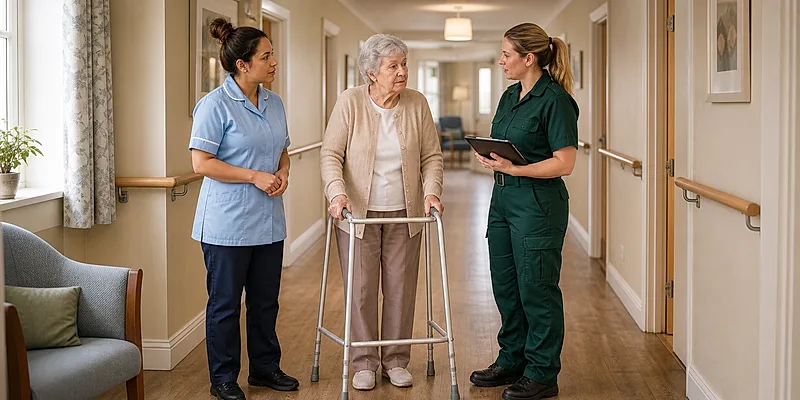
People in care homes may become unwell in ways that are gradual and easy to miss. A resident might be quieter, sleepier, less mobile, eating less, newly confused, more breathless, in more pain or simply not themselves before any obvious clinical crisis occurs. Missing these early changes can mean the person becomes more distressed, less safe and harder to treat.
This course is for care assistants, senior carers, support workers, team leaders, supervisors, night staff and other frontline care home staff in residential and nursing homes. It focuses on recognising change, using local escalation routes and acting promptly. It does not replace clinical diagnosis, prescribing decisions, emergency care training, or local competency requirements for observations, escalation tools and urgent pathways.
This course is written for UK care home staff. It cites official sources relevant to UK practice, including NHS England's PIER approach and Enhanced Health in Care Homes framework, CQC Regulation 12 for England, NICE transition guidance, ReSPECT resources where used locally, and devolved-nation sources for Wales, Scotland and Northern Ireland. The practical message is UK-wide: know the resident's baseline, follow the current care plan, use the local escalation route and act promptly when deterioration appears.
Why This Course Matters
- Deterioration is often subtle at first: soft signs can precede clear clinical signs.
- Care home staff know the baseline: staff can spot change before visiting clinicians do.
- Delay creates risk: late escalation can make deterioration harder to manage.
- Good escalation is practical: it relies on clear observations, the right route, timing and a concise handover.
- Role boundaries still matter: acting promptly does not mean diagnosing beyond your competence.
How This Course Will Help You
By the end of the course you should be better able to notice early and obvious signs of deterioration, compare them with the person's usual baseline, use local escalation routes more safely, support person-centred urgent decisions and hand over concerns more clearly.
A Simple Deterioration Spine
- Start with baseline: know what is normal for this person.
- Take soft signs seriously: quieter or small changes still count.
- Join the dots: food, fluids, mobility, pain, confusion and function often relate to the same problem.
- Escalate on time: do not let urgent change slip into the next routine review.
- Record clearly: note what changed, when, what you did and what happened next.
Rate this page
Sign up now for a free account
Course tools & details

