
Care Navigation for GP Receptionists and Care Navigators

Safe access, signposting, escalation and patient trust

  • Reputation

    No token earned yet.

    Reach 50 points to earn the Peridot (Trainee Level).

  • CPD Certificates

    Certificates

    You have CPD Certificates for 0 courses.

  • Exam Cup

    No cup earned yet.

    Average at least 80% in exams to earn the Bronze Cup.

Launch offer: Certificates are currently free when you create a free account and log in. Log in for free access

Matching need to the right person, service, timeframe and consultation mode
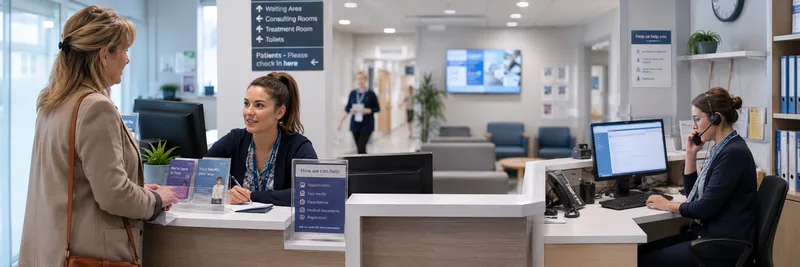
GP practice reception desk with staff assisting patient

Effective care navigation goes beyond "who has a slot?" It assesses what the patient needs, how urgent it is, whether continuity matters, which team member is appropriate, which consultation mode is suitable, and whether the patient can safely use that route.

Some problems are best managed by a GP. Others suit a nurse, pharmacist, physiotherapist, paramedic or mental health practitioner. Some requests are administrative. Many can be addressed by community pharmacy, optometry, dentistry, urgent care, social prescribing, local authority or voluntary services.

Who makes up your local GP practice team? (NHS England Short Film)

Video: 2m 17s · Creator: Frimley Health and Care Integrated Care System. YouTube Standard Licence.

This Frimley Health and Care Integrated Care System video shows that GP practice teams include more roles than doctors and nurses. It begins with a receptionist explaining that asking brief questions helps direct patients to the right professional or local service.

The film introduces wider team roles. A social prescriber explains practical non-medical support such as activity groups, form help and assistance to access community services. A physiotherapist describes treating bone, muscle or joint problems directly without a GP appointment.

A paramedic explains visiting patients at home when they are too unwell or unable to attend. The video also describes mental health support and closes by emphasising that answering receptionist questions helps patients reach appropriate care.

Was this video a good fit for this page?

Factors to consider

  • Person: GP, nurse, pharmacist, physiotherapist, mental health practitioner, social prescriber, admin team or external service.
  • Timeframe: emergency, same day, urgent, routine or planned follow-up.
  • Mode: face to face, telephone, video, message, online response or home visit request.
  • Continuity: known clinician, ongoing condition, frailty, complex needs or sensitive issue.
  • Access needs: interpreter, hearing support, digital exclusion, carer involvement or safe contact concerns.

Scenario

A patient with diabetes requests a routine medication review and says they prefer the nurse who usually helps them because changes confuse them.

What should care navigation consider?

The best next step is the one that is safe, appropriate, understandable and available through the agreed pathway.


Ask Dr. Aiden


Rate this page


Course tools & details Study tools, course details, quality and recommendations
Funding & COI Media Credits
