

Welcome
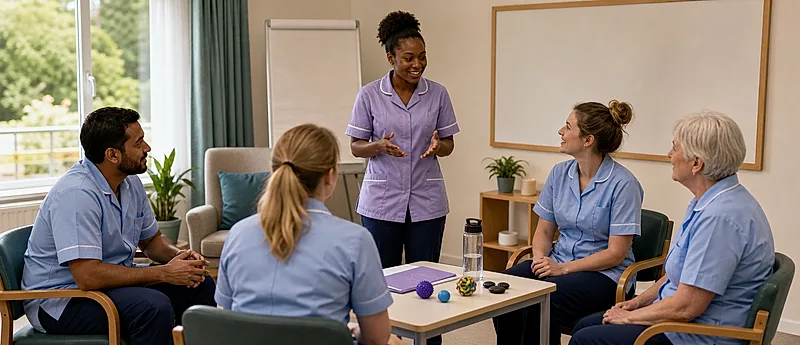
Care home staff regularly face multiple pressures during a shift: residents need attention, call bells sound, relatives may be anxious, paperwork accumulates, handovers must be accurate, and unexpected events can disrupt plans. Cognitive Behavioural Therapy (CBT) offers practical techniques to recognise how thoughts, feelings and actions interact in those moments, so stress can be identified and managed more effectively.
This course is for care assistants, support workers, senior carers, nurses in care homes, activity staff, domestic and catering colleagues, team leaders, managers and other staff who support residents in residential or nursing care. The content is written for a UK audience while acknowledging differences in services, regulators, employer policies and support routes across England, Scotland, Wales and Northern Ireland.
This is not training to deliver CBT as therapy. It introduces straightforward CBT-informed techniques to help staff spot unhelpful thinking, challenge assumptions and respond more calmly during busy or emotionally demanding shifts.
Why This Course Matters
- Stress depends on interpretation as well as events: the thought linked to a complaint, delay, incident or difficult interaction can increase pressure.
- CBT gives clear, practical methods: models such as ABC and ABCDE break stressful situations into parts you can review and change.
- Many care home stressors recur: distressed residents, worried relatives, personal care routines, staffing gaps, handovers and high self-demands often repeat across shifts.
- Small cognitive changes help: more balanced thinking can improve communication, concentration, emotional steadiness and recovery after difficult episodes.
How This Course Will Help You
By the end of the course you should be able to use basic CBT-informed techniques to identify stress-inducing beliefs, correct common thinking distortions, ground yourself during immediate stress and build practical habits that support calmer, more resilient practice.
Is this the right stress management course for you? We have many others for care staff, covering different techniques. Click here for more info.
Rate this page
Sign up now for a free account
Course tools & details

