

Urgent routes and local pathways
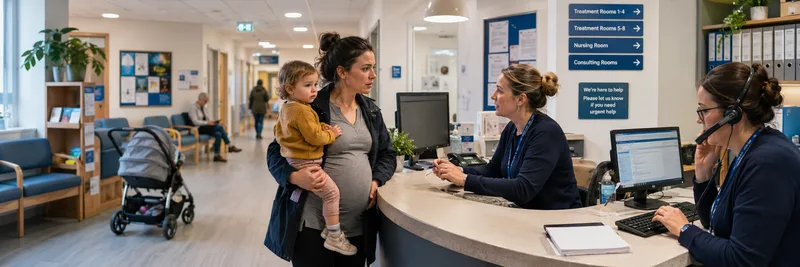
Urgent contacts must be routed quickly to whoever will take clinical responsibility. Depending on local protocol this may be the duty clinician, 999, NHS 111 or local urgent care, maternity triage or an early pregnancy unit, a mental health crisis team, safeguarding services, or another agreed urgent service.
The receptionist’s role is to activate that route, not to hold clinical risk while deciding what should happen. Local wording should make clear when staff must advise emergency help and how to record the interaction.
Common escalation routes
- Duty clinician: for urgent clinical ownership within the practice where local protocol permits.
- 999: for possible life-threatening emergencies, using the practice's approved wording and arrangements.
- NHS 111 or local urgent care: for urgent problems that are not immediate emergencies.
- Maternity or early pregnancy pathways: for reduced fetal movements, bleeding, leaking fluid, severe pain or other pregnancy-related concerns.
- Mental health crisis and safeguarding routes: when there is risk to the patient, baby, child or others.
- Manager or senior support: when there is refusal, conflict, uncertainty, failed contact or an unclear next step.
Do not let the route stall
Escalation must result in someone taking ownership. A message left unseen in a task list, an online request waiting in a queue, or a note added without confirming who will act is not sufficient for urgent cases.
If a parent, carer or pregnant patient resists the urgent route because they want a GP to check first, follow the local process. Do not personally reassure them that waiting is safe. Record the refusal, the exact wording used, the advice or escalation given, and who was informed.
What happens when you call 999 and how you can help us help the patient
Escalation is only safe when the contact has a clear owner and the urgent wording has not been left in a routine queue.
Ask Dr. Aiden
Rate this page
Sign up now for a free account
Course tools & details

