

Recording reception notes accurately
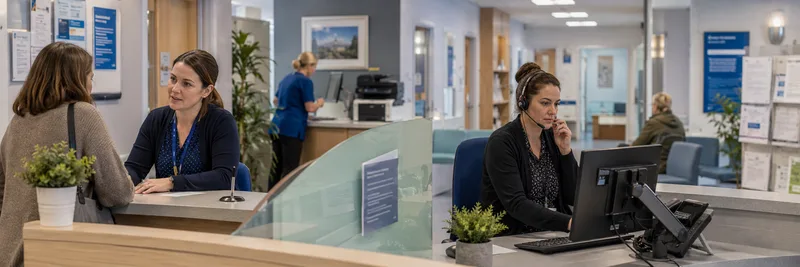
Reception notes influence care, safety, safeguarding, complaints and future contacts. They should be accurate, factual, necessary and clear for the next person to use.
A useful note is concise. Record what was said, what was done and who is responsible for the next step.
Write facts, not labels
- Use patient words where helpful: quote or paraphrase patients for symptoms, concerns, safe-contact instructions or complaints.
- Avoid judgemental labels: do not use terms like "awkward," "rude," "attention-seeking" or "frequent flyer."
- Separate behaviour from interpretation: describe what happened rather than your assumption about it.
- Record actions: note who was informed, which communication route was used and what follow-up was agreed.
Be careful with third-party information
Information from relatives, carers, neighbours, schools or employers can be relevant but must be recorded carefully. State who provided it and avoid presenting unverified claims as fact.
Certain third-party details may create risk if visible to the patient or a proxy user. Apply local policy on safeguarding-sensitive information, domestic abuse concerns, third-party comments and record visibility.
Correct mistakes properly
Do not erase or conceal errors. Use the local correction process, typically adding a factual clarification while preserving the audit trail.
If information is on the wrong record, shared with the wrong person or exposed inappropriately, treat it as a data incident and report it promptly.
Accurate reception notes protect continuity, confidentiality and trust; vague or judgemental notes can create safety and governance problems.
Ask Dr. Aiden
Rate this page
Sign up now for a free account
Course tools & details

