

Welcome
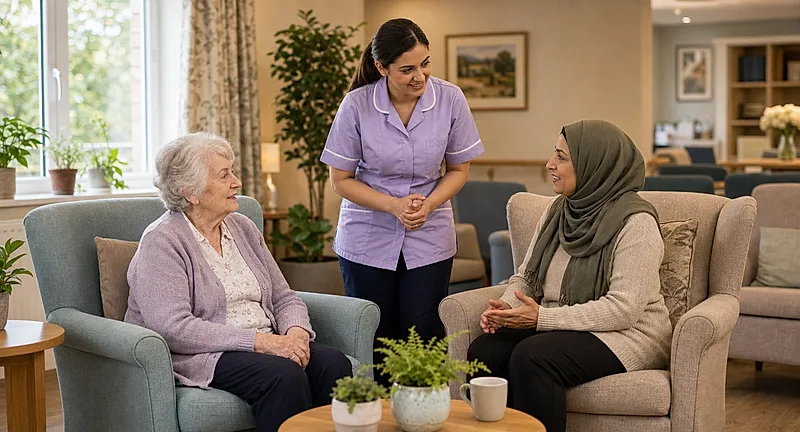
Cross-cultural safety and sensitivity matters every day in residential care. It affects how people are welcomed, how they are spoken to, how personal care is given, what food and routines feel familiar, how families are involved, and whether a person feels respected in what is now their home as well as their place of care.
Who this course is for
This course is for frontline staff in residential care homes, nursing homes, and similar adult social care settings.
- Care assistants and support workers.
- Senior carers, team leaders, and supervisors.
- Staff who support daily routines, personal care, meals, family contact, activities, or end-of-life care.
- Any worker who wants to reduce avoidable distress, exclusion, misunderstanding, and harm.
The practical aim
The course focuses on practical care, not abstract theory. The aim is to help you notice what matters to each person and turn that knowledge into safer day-to-day support.
- Ask before assuming.
- Listen for what helps the person feel safe.
- Record important preferences clearly.
- Share what works across the team.
- Speak up when care becomes discriminatory or unsafe.
Cross-cultural care includes staff too
Many staff in UK care services are themselves from a wide range of cultural, linguistic, religious, and migration backgrounds. Cross-cultural care is not about a fixed group of "British staff" learning about "other people". It is about working safely and respectfully across differences between residents, relatives, colleagues, and professionals.
UK-wide framing
This is a UK-wide course about respectful, person-led care across cultural, linguistic, religious, and social differences. It uses England adult social care regulation where that is helpful, because CQC has specific guidance on culturally appropriate care. The core practice applies across the UK.
Rate this page
Sign up now for a free account
Course tools & details

