

Welcome
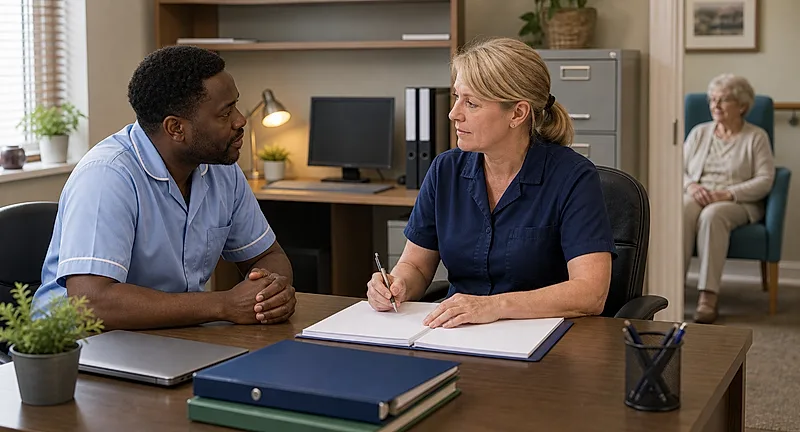
Care staff handle residents' private information every day: care plans, medicines, personal care needs, diagnoses, family contact details, photographs, daily notes, handovers, behaviour records, accident reports, safeguarding concerns, and conversations shared in confidence. Data protection and confidentiality are not paperwork extras; they are part of providing safe, dignified care.
This course is for care assistants, senior carers, support workers, activity staff, night staff, housekeeping staff, team leaders, supervisors and other frontline staff in residential care homes, nursing homes, supported living and similar adult social care settings. It is a staff-level course; managers, data protection leads and governance staff should use a separate course that covers policies, contracts, audits, Data Protection Impact Assessments, breach decision-making and information governance systems in more depth.
The legal core of this course applies across the UK: UK GDPR, the Data Protection Act 2018, the common law duty of confidentiality and ICO guidance. Some care-regulation examples are mainly England-facing, for example CQC Regulation 17 and the Data Security and Protection Toolkit. Wales, Scotland and Northern Ireland have their own regulators and records-management arrangements, so always follow your employer's procedures and nation-specific guidance.
Why This Course Matters
- Residents are entitled to dignity and privacy: intimate or sensitive details should not be exposed because staff are rushed, casual or unsure about boundaries.
- Health and social care information is sensitive: much of it is special category data and needs extra protection.
- Good sharing keeps people safe: confidentiality does not prevent sharing information with colleagues or safeguarding partners who need to know.
- Most breaches are practical: visible screens, lost paperwork, wrong emails, overheard handovers, unsecured phone photos or casual family updates can all cause harm.
- Every role matters: frontline staff create, view, carry, discuss and protect information on every shift.
How This Course Will Help You
By the end of the course you should be able to recognise personal and special category data, protect confidentiality in everyday care, use records and communication channels safely, respond appropriately to family and professional requests, escalate safeguarding information and report possible data breaches promptly.
A Simple Learner Spine
- Respect: treat private information as part of the resident's dignity.
- Need to know: only access, discuss or share what is needed for care, safety or another legitimate work purpose.
- Minimum necessary: use the smallest amount of information that allows safe care.
- Record well: make records accurate, timely, factual and respectful.
- Share safely: do not let concern about data protection stop necessary care or safeguarding information sharing.
- Report quickly: escalate mistakes, losses, wrong disclosures and suspicious access without delay.
Rate this page
Sign up now for a free account
Course tools & details

