

Welcome
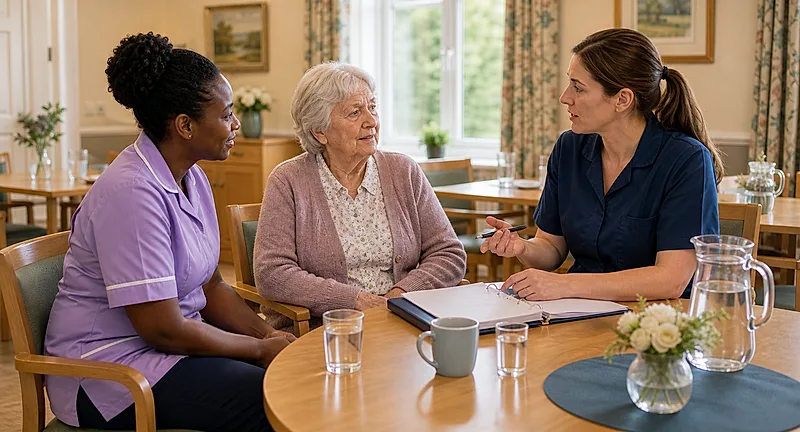
Eating and drinking can become risky when someone has swallowing difficulties. Simple factors - texture, pace, position, supervision and clear escalation - often determine whether a meal is safe or harmful.
This course is for care assistants, senior carers, support workers, team leaders, supervisors, night staff and other frontline care home staff in residential and nursing homes. It is a short frontline course on safer food and fluid support for people with dysphagia and choking risk. It does not replace speech and language therapy assessment (SALT or SLT), dietetic advice, local competency requirements, medicines advice, tube-feeding training or first-aid training.
This course is written mainly around current England adult social care guidance from CQC and NICE, with UK-wide adult choking guidance from Resuscitation Council UK. Wales, Scotland and Northern Ireland use the same core safety principles but have their own resources, pathways and service arrangements, so staff must follow local policy as well as the practice covered here. The four nations are not identical.
Why This Course Matters
- Swallowing difficulty is common in care homes: it may be linked to dementia, stroke, frailty, Parkinson's disease or other illness.
- Small mistakes can have serious consequences: the wrong texture, rushed support or poor positioning can lead to choking or aspiration.
- Detailed plans matter: vague terms and missing handover leave staff guessing at crucial moments.
- Carers see the real mealtime picture: coughing, tiredness, refusal, slow swallowing and distress are often noticed first by frontline staff.
- Emergency response still matters: staff must recognise when a swallowing concern has become an acute choking emergency.
Rate this page
Sign up now for a free account
Course tools & details

