
Explaining Reception Questions for GP Receptionists and Care Navigators

Building trust when asking for information at first contact

  • Reputation

    No token earned yet.

    Reach 50 points to earn the Peridot (Trainee Level).

  • CPD Certificates

    Certificates

    You have CPD Certificates for 0 courses.

  • Exam Cup

    No cup earned yet.

    Average at least 80% in exams to earn the Bronze Cup.

Launch offer: Certificates are currently free when you create a free account and log in. Log in for free access

Scripts, templates and the wider practice team
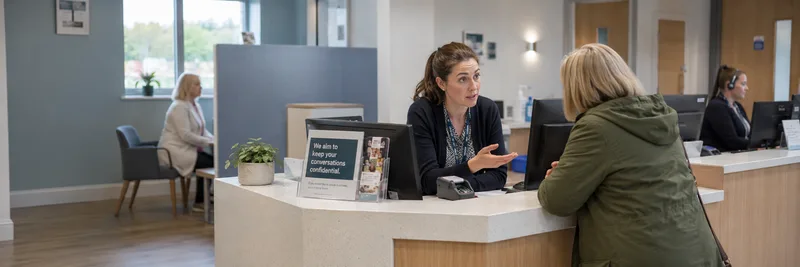
GP receptionist speaking with patient at desk

Patients may assume reception staff are asking personal questions out of curiosity or personal authority. It helps to explain that staff are following a practice-agreed script, template or care navigation process.

It also helps to describe the wider team. The next step might be a GP, nurse, pharmacist, physiotherapist, mental health practitioner, admin team, community pharmacy or another local service.

Ways to explain the process

  • "These are the questions the practice asks for this type of request."
  • "The GPs and practice team have agreed this process."
  • "It helps us work out which team member or service can help."
  • "I will record your words so the next person has the right information."
  • "If it does not fit the script, I will ask for help."

Describe scripts as a practice safety process, not as a receptionist's personal barrier.

The Role of the GP Receptionist - Faces of Primary Care

Video: 2m 39s · Creator: NHS Greater Glasgow and Clyde. YouTube Standard Licence.

This NHS Greater Glasgow and Clyde video features Louise McGregor, a GP receptionist, describing the receptionist role in patient care. She explains answering calls, booking appointments, following up clinic information, handling results work and helping patients find the right route for their concern.

The video makes clear that receptionists ask the reason for contact so they can identify what support is needed and which route fits the practice process. Examples include appointments, telephone consultations, signposting to pharmacy, physiotherapy, advanced nurse practitioner or mental health routes, and urgent escalation when the practice process requires it.

Louise explains that the questions help find the quickest useful route, which may not always be a GP appointment. She emphasises that the questions are not intended to invade privacy but to direct the patient to appropriate care, and highlights the importance of rapport and continuity with patients.

Was this video a good fit for this page?

Scenario

A patient says, "Why are you reading from a script? I need someone who understands my problem, not a checklist."

How can you explain the script without sounding robotic?


Ask Dr. Aiden


Rate this page


Course tools & details Study tools, course details, quality and recommendations
Funding & COI Media Credits
