
Explaining Reception Questions for GP Receptionists and Care Navigators

Building trust when asking for information at first contact

  • Reputation

    No token earned yet.

    Reach 50 points to earn the Peridot (Trainee Level).

  • CPD Certificates

    Certificates

    You have CPD Certificates for 0 courses.

  • Exam Cup

    No cup earned yet.

    Average at least 80% in exams to earn the Bronze Cup.

Launch offer: Certificates are currently free when you create a free account and log in. Log in for free access

The simple explanation: helping the practice route the request
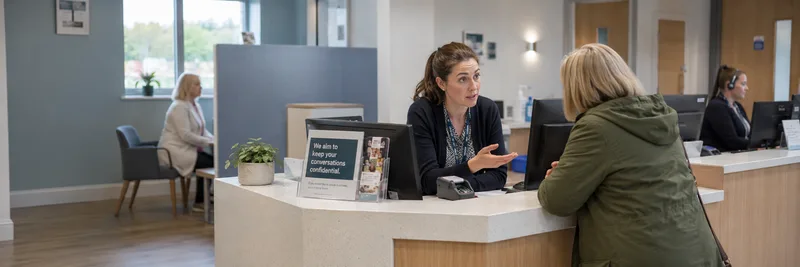
GP receptionist speaking with patient at desk

A clear, short explanation works best: "We ask a few questions so the practice can direct your request to the right person or process."

This phrasing emphasises help, safety and the practice team. It avoids implying reception staff are diagnosing, refusing care or personally deciding clinical urgency.

Useful wording

  • "I only need a brief outline."
  • "This helps us get your request to the right person or team."
  • "The information is handled confidentially."
  • "I am following the process the practice uses for all requests."
  • "If anything sounds urgent or unclear, I will use our escalation route."

The core message is: questions help the practice route the request safely; they are not a test the patient has to pass.

GP receptionists are trained to guide you to the best care.

Video: 0m 41s · Creator: Scottish Government. YouTube Standard Licence.

This Scottish Government video shows that GP receptionists are trained to guide people to the most appropriate care when they contact a practice. Receptionists may ask a few simple questions, in confidence, so patients can be directed to the right service.

The video describes reception staff as part of the route to appropriate support rather than as clinicians making diagnostic decisions. It explains that a GP is not always the best person for every problem and gives examples of other professionals who may be appropriate, including a nurse, optometrist, dentist or pharmacist.

The main point is that brief questions help the practice identify which person or service can help. The patient-facing line is simple: questions are asked to help people reach suitable care, not to make access harder.

Was this video a good fit for this page?

Scenario

A patient says, "I do not want to tell reception my problem. I just want the doctor." They sound more anxious than angry.

Which short explanation is most helpful?


Ask Dr. Aiden


Rate this page


Course tools & details Study tools, course details, quality and recommendations
Funding & COI Media Credits
