

Welcome
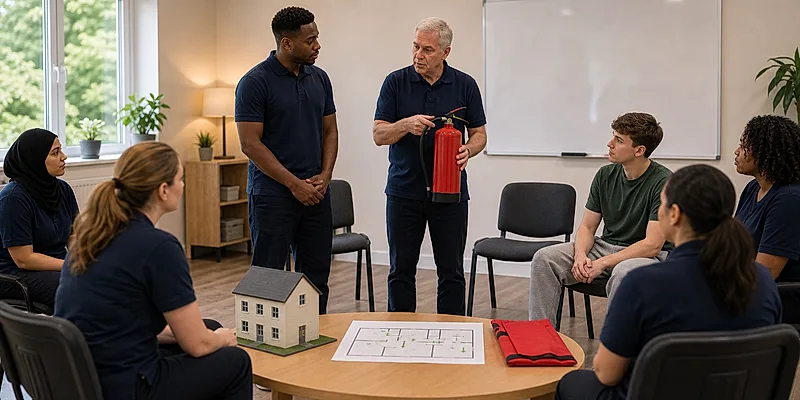
Fire safety in a children's home involves spotting hazards early, keeping escape routes clear, knowing the alarm and evacuation arrangements, and responding calmly if there is smoke, fire or an alarm during a busy shift or at night. The safest response depends on local planning, not guesswork.
This course is for residential child care workers, senior residential workers, waking night staff, team leaders, deputy managers, registered managers and other staff working in children's homes and residential child care settings. It is a basic awareness course and does not replace site induction, fire drills, local evacuation training or specific instructions for your building and the young people in your care.
This course is written for children's homes staff across the UK. It uses general workplace fire-safety principles, refers to GOV.UK fire-safety duties for England and Wales where relevant, and points to separate official guidance for Scotland and Northern Ireland where frameworks differ. Staff must follow the local fire plan, the layout of their building and local emergency procedures.
Why This Course Matters
- Children may need support fast: alarms, smoke and night-time disruption can quickly increase confusion and risk.
- Small hazards matter: things like phone chargers, blocked routes and wedged doors can change how a fire develops and how people escape.
- Local plans are vital: the safest action depends on the building, staffing and who is present.
- Drills reveal problems: practicing evacuation exposes weak points you can fix.
- Calm action protects people: raising the alarm early, giving clear information and following the plan reduce harm more than panic or trying risky rescues.
A Simple Fire Spine
- Prevent: notice and remove hazards before they cause incidents.
- Protect: ensure routes, doors and fire equipment are maintained and used correctly.
- Raise the alarm: alert others immediately rather than waiting to assess the situation yourself.
- Follow the plan: use the local evacuation arrangement rather than improvising.
- Report and learn: record incidents and weak drills so problems are fixed promptly.
Rate this page
Sign up now for a free account
Course tools & details

