

Welcome
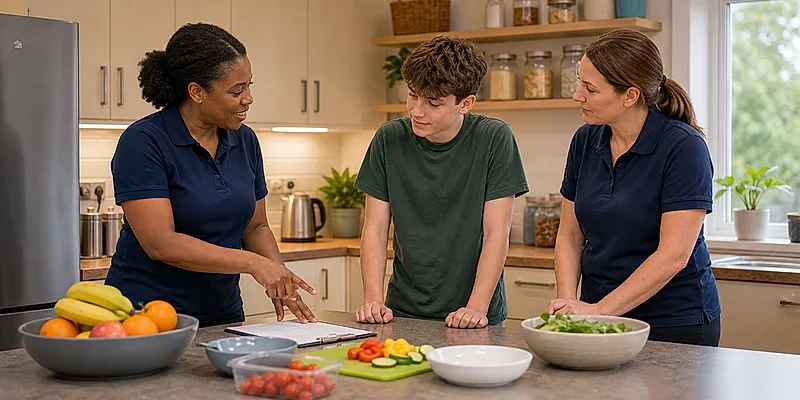
Food in a children's home involves much more than preparing meals. Staff may cook breakfast, supervise snacks, shop, serve takeaways, check labels for allergens, spot spoiled food, support children who are anxious about eating and respond if someone becomes unwell at mealtimes. Safe food routines protect health and help maintain trust and a normal home life.
This course is for residential child care workers, senior residential workers, waking night staff, team leaders, deputy managers, registered managers and other staff in children's homes and residential child care settings. It provides basic awareness and does not replace local kitchen rules, food-hygiene supervision, medical advice, allergy plans or emergency first-aid training.
The course is written for staff across the UK. Its food-safety content follows Food Standards Agency guidance for England, Wales and Northern Ireland, Food Standards Scotland signposting for Scotland, NHS allergy emergency advice and relevant England children's homes guidance. Some systems differ by nation - for example, Safer Food Better Business in England and Wales and Safe Catering in Northern Ireland - so staff must also follow their home's food-safety management system and local regulator requirements.
Why This Course Matters
- Food problems can become safety problems fast: poor hygiene, incorrect storage or unsafe assumptions about allergies can cause real harm.
- Children may rely on staff for safe choices: some young people need help reading labels, following routines, planning meals or raising concerns about allergy risk.
- Mealtimes affect relationships: calm, respectful support usually works better than pressure, shame or confrontation.
- Takeaways and snacks still count: food safety applies to informal meals as well as the main kitchen or planned evening meals.
- Escalation matters: choking, anaphylaxis, vomiting, diarrhoea or suspected contamination require prompt action.
A Simple Mealtime Spine
- Check: know who can eat what and follow the child's plan.
- Clean: wash hands, surfaces, equipment and store food correctly.
- Separate: keep raw foods, allergens and ready-to-eat items apart to avoid cross-contamination.
- Support: help meals stay safe, calm and respectful.
- Escalate: stop and get help when food or a person's health is unsafe.
Rate this page
Sign up now for a free account
Course tools & details

