
GP Appointment Types for GP Receptionists and Care Navigators

Common appointment types, team pathways and booking records

  • Reputation

    No token earned yet.

    Reach 50 points to earn the Peridot (Trainee Level).

  • CPD Certificates

    Certificates

    You have CPD Certificates for 0 courses.

  • Exam Cup

    No cup earned yet.

    Average at least 80% in exams to earn the Bronze Cup.

Launch offer: Certificates are currently free when you create a free account and log in. Log in for free access

Admin requests, documents, medicines and test results
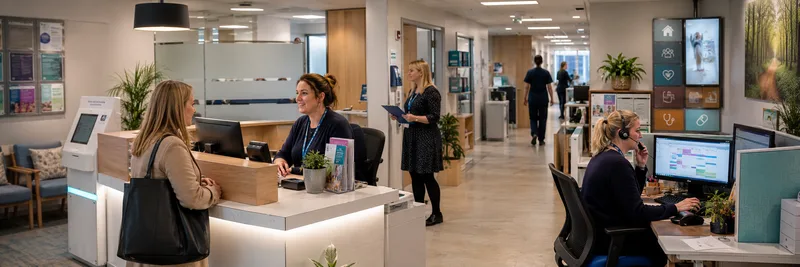
GP practice reception desk with staff assisting patients

Not every patient contact requires a clinical appointment. Many requests can be handled as administrative tasks, document workflows, medicines workflows, test-result queries, online form responses or messages routed to a specific team.

These routes still need appropriate clinical oversight. A result query may require clinician review. A prescription request can need a medication review. Document requests may require identity checks, consent, deadlines and fees. Some forms will not be NHS work.

Pharmacy First: A digital explainer for GPs and healthcare leaders

Video: 2m 18s · Creator: Community Pharmacy England. YouTube Standard Licence.

This Community Pharmacy England video describes Pharmacy First, an NHS service that lets patients consult pharmacists for common minor conditions without always needing a GP appointment. It explains how Pharmacy First builds on the community pharmacist consultation service to provide faster access to advice and treatment.

The video states that GP practices and other health services can electronically refer patients to community pharmacy for a minor illness consultation. For seven specified conditions pharmacists may supply an NHS medicine where clinically appropriate: sinusitis, sore throat, acute otitis media, infected insect bite, impetigo, shingles and uncomplicated urinary tract infections in women.

Referrals can come from general practice, NHS 111, 111 online, 999 services, primary care out-of-hours and urgent and emergency care settings. Treatment supplied through the service should be recorded in the patient's GP record. If the pharmacist cannot manage the presenting condition, the patient should be referred to another appropriate service such as their GP practice or an emergency department.

Was this video a good fit for this page?

Common non-appointment routes

  • Fit notes, letters, medical reports and forms.
  • Repeat prescription requests and nominated pharmacy changes.
  • Medication review booking or pharmacist tasks.
  • Test-result queries and follow-up after results.
  • Hospital letters, referral queries and private-work requests.
  • Admin corrections, contact details and access to records.

Do not use a clinical appointment slot for an admin workflow unless the local process specifies a consultation is needed.

Scenario

A patient asks for an urgent GP appointment because they cannot see a repeat medicine in the NHS App. They say they are nearly out of tablets.

How should you think about the pathway?


Ask Dr. Aiden


Rate this page


Course tools & details Study tools, course details, quality and recommendations
Funding & COI Media Credits
