
Manual Handling for Children's Homes Staff

Safer lifting, carrying, pushing and pulling in residential child care

  • Reputation

    No token earned yet.

    Reach 50 points to earn the Peridot (Trainee Level).

  • CPD Certificates

    Certificates

    You have CPD Certificates for 0 courses.

  • Exam Cup

    No cup earned yet.

    Average at least 80% in exams to earn the Bronze Cup.

Launch offer: Certificates are currently free when you create a free account and log in. Log in for free access

Safer lifting, carrying, pushing and pulling
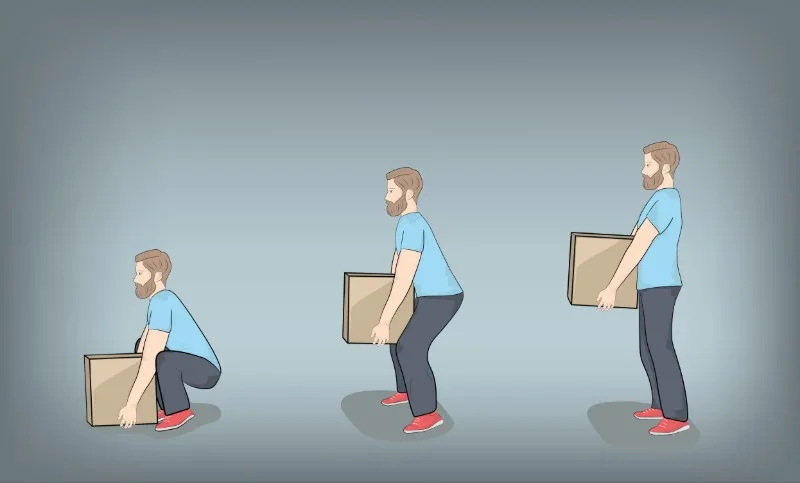
Three-step illustration of a person lifting a box

A straightforward safer method will suit most everyday tasks. Consider the load's size, grip, distance to move it and any obstacles. If the load is too heavy, bulky or awkward, change the plan rather than forcing the task.

Keep the load close to your body where possible. Avoid twisting while carrying - turn your feet instead. Use both hands when you can. Push rather than pull if that gives better control, but only when the route is clear and the equipment moves freely.

Safe Lifting in the Workplace

Video: 5m 51s · Creator: SAFEWorkManitoba. YouTube Standard Licence.

This SAFE Work Manitoba video shows safer lifting techniques for common workplace items. It starts from a stable power position: feet apart with one slightly forward, hips and knees bent, the back in its natural curves, shoulders steady and the load held close to the body.

Different lifts suit different situations. A squat lift can work for some loads. A straddle lift helps bring small repetitive items closer. A half-kneel lift gives stability for low-level lifts. A golfer's lift can help with light items in bins. Choose the method based on the load's size, shape, weight, grip, repetition and path.

The video emphasises technique as one element of safer manual handling, not a guarantee that every lift is safe. Heavy, awkward or repeated loads may still need assessment, better storage, splitting into smaller loads, suitable equipment or a change to the task.

Was this video a good fit for this page?

Simple safer basics

  • Test first: check weight and grip before committing to the lift.
  • Clear the route: doors, stairs, toys, bags and people all affect the task.
  • Split the job: smaller loads are often safer than one heavy lift.
  • Keep balance: do not lean sideways or reach while carrying.
  • Use equipment: a trolley or another simple aid may remove the risk.

Scenario

A worker starts dragging a heavy box up the stairs because it is already halfway there and turning back feels like wasted time.

Why is that a poor choice?


Good manual handling is usually simple. Check the load, clear the route, keep control and change the plan before the task becomes awkward.

Ask Dr. Aiden


Rate this page


Course tools & details Study tools, course details, quality and recommendations
Funding & COI Media Credits
