

Welcome
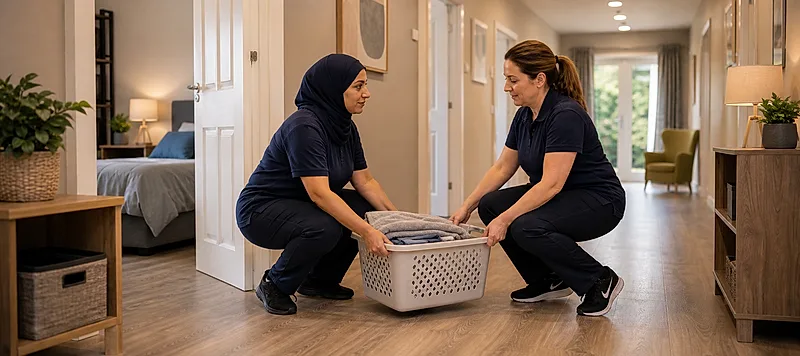
Manual handling is part of everyday work in children's homes. Tasks include carrying activity kit, moving boxes, pushing loaded trolleys, setting up rooms, taking luggage to bedrooms, loading cars, moving furniture, carrying laundry and working in awkward storage spaces. Done poorly, these activities can strain backs, shoulders, wrists or knees and minor injuries can develop into longer-term problems.
This course is for residential child care workers, senior residential workers, waking night staff, team leaders, deputy managers, registered managers and other staff working in children's homes and residential child care settings. It provides basic awareness and does not replace local manual-handling training, site-specific risk assessment or specialist training for disability support, physical intervention or person-handling tasks.
The content uses Great Britain HSE guidance for the core safer-handling approach and signposts HSENI guidance for Northern Ireland. Where relevant it refers to the Guide to the Children's Homes Regulations including the quality standards for England. Always follow local policy, local risk assessments and local procedures.
Why This Course Matters
- Small jobs still cause injury: strains often happen during ordinary lifting, carrying, pushing and pulling.
- Rushing makes things worse: trying to save one trip or "just get it done" often creates the real risk.
- Awkward spaces matter: stairs, car boots, cramped cupboards and blocked routes change the task.
- Children's homes are busy places: clutter, interruptions and mixed priorities can make simple jobs less safe.
- Speaking up early helps: pain, near misses and repeated awkward tasks should not be treated as normal.
A Simple Safer-Handling Spine
- Pause: look at the load, the route and the space before you start.
- Reduce: split the load, use equipment or ask for help if needed.
- Move well: keep the load close, avoid twisting and do not rush.
- Stop: if the task changes or feels unsafe, pause and rethink it.
- Report: tell someone about pain, defects, near misses and poor systems.
Rate this page
Sign up now for a free account
Course tools & details

