

Welcome
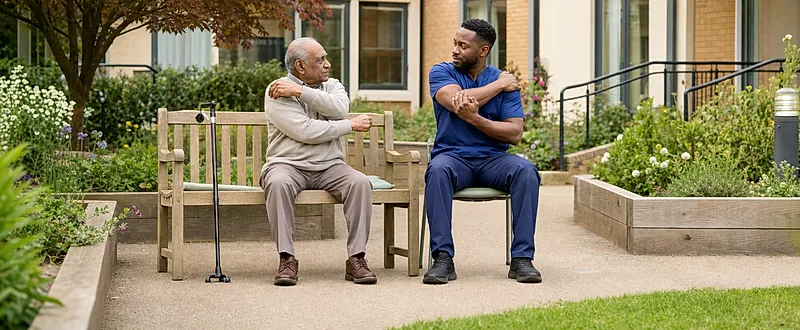
Care home roles are often physically demanding. This course shows how brief, safe, and regular movement can aid stress recovery, improve sleep and energy, support mood, and build resilience without adding unrealistic burdens to a busy shift pattern.
This course is for care assistants, support workers, senior carers, nurses working in care homes, activity staff, domestic and catering colleagues, team leaders, managers and other staff in care home settings. It uses a UK-wide perspective while recognising that clinical guidance, employer policies and support routes differ across England, Scotland, Wales and Northern Ireland.
Adapt activity to your health, ability and workload. If you have a health condition, injury, pregnancy-related concerns, pain, dizziness or other symptoms, seek appropriate clinical advice before changing your activity level.
Why This Course Matters
- Movement supports stress recovery: regular activity can improve mood, sleep and energy.
- Small habits count: short walks, stretching, mobility and strength work are often more achievable than long gym sessions.
- Care work creates physical strain: movement plans should aid recovery and avoid adding exhaustion.
- Barriers are normal: shift patterns, fatigue, caring responsibilities and low motivation require flexible, realistic planning.
How This Course Will Help You
On completion you will be able to explain how physical activity supports stress management, choose suitable types of movement, create a flexible plan that fits your role, address common barriers and identify when to seek safety advice or wider support.
Is this the right stress management course for you? We have many others for care staff, covering different techniques. Click here for more info.
Rate this page
Sign up now for a free account
Course tools & details

