

Welcome
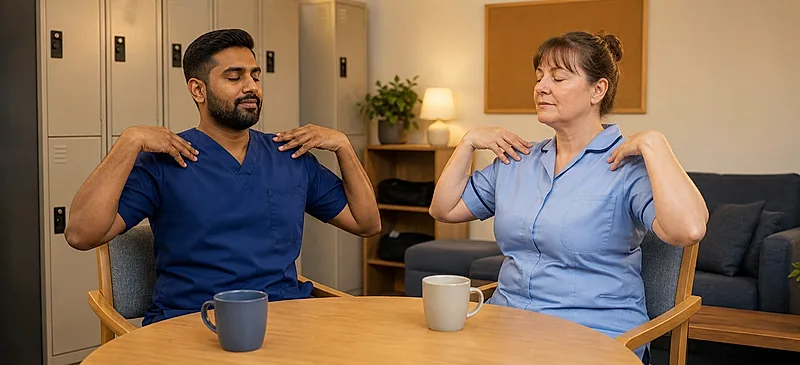
Stress in care homes often shows in the body: tight shoulders, shallow breathing, clenched hands, jaw tension, headaches, tiredness or a sense of being constantly braced. Progressive relaxation techniques help staff notice and reduce physical tension so they recover more effectively and respond with greater steadiness.
This course is for care assistants, support workers, senior carers, nurses working in care homes, activity staff, domestic and catering colleagues, team leaders, managers and other residential or nursing care staff across the UK. Employer policies, regulators and local support routes differ between England, Scotland, Wales and Northern Ireland, so apply relevant workplace rules as you practise.
The course introduces Progressive Muscle Relaxation (PMR), guided imagery and brief relaxation resets. These are self-management tools, not therapy, and should be adapted for existing health conditions, pain, trauma history, current duties and any supervision or safety requirements.
Why This Course Matters
- Stress lives in the body: physical bracing can keep symptoms active after a shift or difficult interaction.
- Relaxation can be brief: short resets can be used between tasks or after challenging moments.
- Body awareness protects steadiness: noticing tension early can reduce rushed or sharp responses.
- Safety still matters: relaxation techniques do not replace breaks, staffing, equipment or workplace risk controls.
How This Course Will Help You
After this course you will be able to describe common physical stress responses, use a simple PMR sequence, try guided imagery when suitable, apply quick relaxation resets and recognise when to seek further support.
Is this the right stress management course for you? We have many others for care staff, covering different techniques. Click here for more info.
Rate this page
Sign up now for a free account
Course tools & details

