
Safe Questions for GP Receptionists and Care Navigators

Useful first-contact questions without clinical advice

  • Reputation

    No token earned yet.

    Reach 50 points to earn the Peridot (Trainee Level).

  • CPD Certificates

    Certificates

    You have CPD Certificates for 0 courses.

  • Exam Cup

    No cup earned yet.

    Average at least 80% in exams to earn the Bronze Cup.

Launch offer: Certificates are currently free when you create a free account and log in. Log in for free access

Asking about sensitive or private details
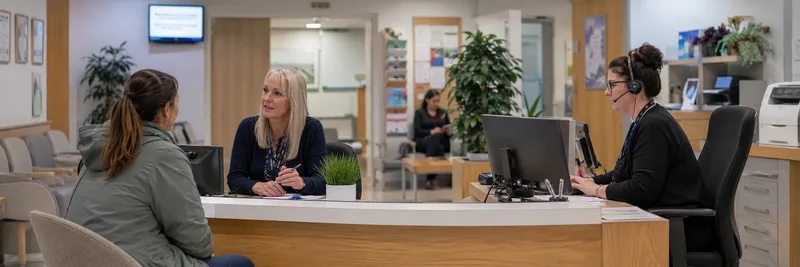
GP practice reception desk with staff and patient

Some requests involve information patients may find embarrassing, frightening or unsafe to discuss. Questions about sensitive topics should be asked calmly, with privacy and respect for how much the patient can safely say.

Often you only need a brief outline rather than a full account. If clinicians need more detail, they should collect it through the appropriate route.

Sensitive question habits

  • Offer privacy before asking for personal detail.
  • Use neutral language and avoid words that convey surprise or judgement.
  • Say why a brief outline would help.
  • Check whether the patient can be contacted safely, if relevant.
  • Arrange interpreters or communication support when needed.

Ask for the minimum useful information, protect dignity and escalate when privacy or safety affects what the patient can say.

Consent to share - a video for Southern Health Staff

Video: 2m 6s · Creator: Hampshire and IOW Healthcare NHS Foundation Trust. YouTube Standard Licence.

This Hampshire and IOW Healthcare NHS Foundation Trust video uses two short phone-call examples to show how staff can respond when a family member contacts a service but the patient has not given consent to share information.

In the first example, staff refuse to disclose information because consent has not been given and the call ends. In the second, staff protect confidentiality but invite the family member to describe what they know about the patient. The caller mentions the patient's interests: football, wildlife photography, live music and action films.

The practical point is that lack of consent to disclose does not prevent staff from listening, asking appropriate questions and building a fuller picture of the person. Staff can accept helpful information from relatives or carers without confirming confidential details from the record.

Was this video a good fit for this page?

Scenario

A young adult phones and says quietly, "It is personal. I cannot say it while my partner is in the room." They then go silent.

How should you handle the sensitive detail?


Ask Dr. Aiden


Rate this page


Course tools & details Study tools, course details, quality and recommendations
Funding & COI Media Credits
