
Safe Questions for GP Receptionists and Care Navigators

Useful first-contact questions without clinical advice

  • Reputation

    No token earned yet.

    Reach 50 points to earn the Peridot (Trainee Level).

  • CPD Certificates

    Certificates

    You have CPD Certificates for 0 courses.

  • Exam Cup

    No cup earned yet.

    Average at least 80% in exams to earn the Bronze Cup.

Launch offer: Certificates are currently free when you create a free account and log in. Log in for free access

Why questions matter at first contact
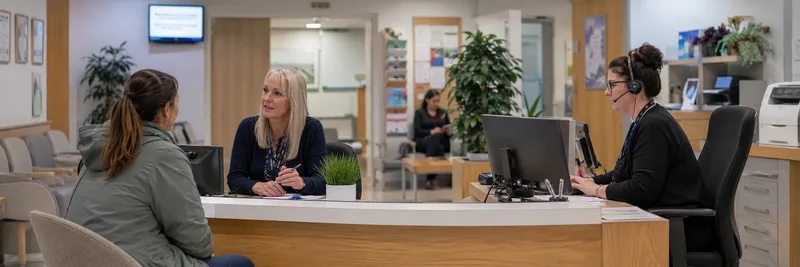
GP practice reception desk with staff and patient

Questions at reception are not casual conversation. They let the practice identify the request, follow the correct process, record the patient's words and spot when a concern needs escalation.

Asking clear, purposeful questions also maintains trust. Patients are more willing to cooperate when they know information is confidential and gathered to help, not to judge them.

Good first-contact questions

  • Ask only for the brief outline needed for routing.
  • Record the patient's own words where you can.
  • Follow the agreed routing script rather than making clinical judgements.
  • Respect privacy and any accessibility requirements.
  • Escalate if answers are worrying or unclear.

The safest question gets the information needed for the agreed process without making the receptionist act as a clinician.

The Role of the GP Receptionist - Faces of Primary Care

Video: 2m 39s · Creator: NHS Greater Glasgow and Clyde. YouTube Standard Licence.

This NHS Greater Glasgow and Clyde video features Louise McGregor, a GP receptionist, describing the receptionist role in patient care. She discusses answering calls, booking appointments, following up clinic information, handling results and helping patients find the appropriate route for their concern.

The video explains that receptionists ask about the reason for contact so they can identify the support needed and the most suitable route within the practice process. Examples include appointments, telephone consultations, signposting to pharmacy, physiotherapy, advanced nurse practitioner or mental health services, and urgent escalation when required.

Louise emphasises that questions are not about invading privacy but about directing the patient to the right service. She also highlights the value of rapport and ongoing relationships with patients.

Was this video a good fit for this page?

Scenario

A patient says, "Why do you need to know? I just want an appointment."

What should your questions achieve?


Ask Dr. Aiden


Rate this page


Course tools & details Study tools, course details, quality and recommendations
Funding & COI Media Credits
