

Carers and supporters: listening without oversharing
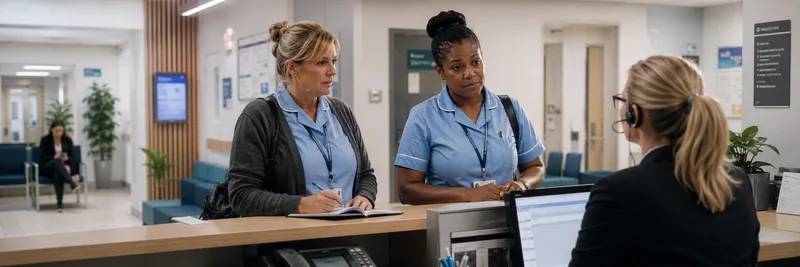
Carers and supporters often know about access needs, symptoms, medication routines, safety risks, daily functioning and changes over time. Their observations help the practice identify and manage risks.
Receiving information from a carer is not the same as disclosing details from a patient record. A receptionist can take and pass on concerns to the appropriate clinician while maintaining patient confidentiality.
Information carers may provide
- Safety concerns: confusion, falls, missed medicines, self-neglect, deterioration or risk at home.
- Access barriers: transport problems, hearing, language, memory, mobility or digital exclusion.
- Communication needs: preferred phone times, requirement for written information, or support to attend appointments.
- Practical changes: hospital discharge, new care package, change in living situation or carer stress.
What not to share without authority
- Test results unless the caller is authorised and local procedure allows it.
- Appointment details where safe contact or confidentiality is unclear.
- Medication lists unless sharing is permitted and necessary.
- Clinician notes, letters or diagnoses without the correct authorisation or route.
How to explain the boundary
Recognise the carer's role and concerns. Say that the practice will record and act on the information, but may not be able to share clinical or record details without the patient's permission or another lawful basis. Tell the caller how to arrange consent, request proxy access or ask a clinician to review the concern.
You can receive useful information from a carer without automatically disclosing information to them.
Ask Dr. Aiden
Rate this page
Sign up now for a free account
Course tools & details

