

Welcome to GOC Standard 11: Equality, Diversity and Inclusion in Optical Practice
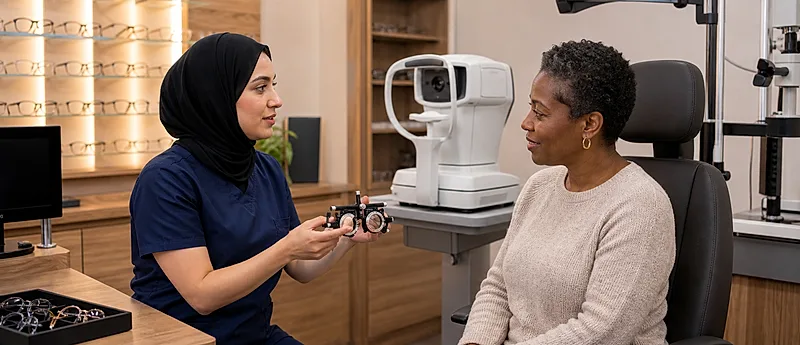
Welcome to this focused course on Equality, Diversity and Inclusion (EDI) tailored for optical teams. This programme explains why EDI is not optional but a core safety control under GOC Standard 11, and it equips you with practical, defensible approaches to protect patients and colleagues from harm caused by exclusion, discrimination and poor psychological safety.
What You Will Learn
- Why EDI matters for patient safety - how exclusion, microaggressions and poor psychological safety increase error and hinder reporting.
- The legal and professional framework: key points of the Equality Act 2010, Protected Characteristics, types of unlawful conduct (direct/indirect discrimination, harassment, victimisation), and data protection considerations.
- Practical, proportionate actions you can use now: immediate bystander scripts, zero-tolerance language, reasonable-adjustment workflow and documentation templates.
- Defensible processes for recruitment, shortlisting and progression - objective criteria, anonymised scoring and panel decisions.
- Fair rota planning and managing religious observance or leave requests with objective justification and audit trails.
- How to respond to discriminatory patients safely and consistently (scripts, escalation and documentation).
- Recording and storage: what to document, where to store governance records, and how to limit sensitive data.
- Measuring progress and governance: key metrics leaders should track and how to embed EDI in routine governance.
- Reflection, learning and continuous improvement: using brief reflective cycles and micro-interventions to embed lasting change.
EDI is a patient-safety intervention: treating it as part of your safety systems - with transparent processes, factual contemporaneous records and objective justification - is the best defence for staff, patients and the organisation.
How This Course Will Help You
- Translate legal principles into everyday, proportionate practice that reduces risk and supports staff wellbeing.
- Improve team decision-making and reduce diagnostic blind-spots through inclusive routines (huddles, SOPs, task allocation).
- Build a defensible audit trail for recruitment, reasonable adjustments and incidents - clear evidence that reasonable steps were taken.
- Give you ready-to-use wording, templates and checklists (incident record, reasonable-adjustment plan, bystander scripts) to use immediately in practice.
- Prepare you for assessments and professional scrutiny by linking EDI actions directly to GOC Standard 11 and common examiner expectations.
Who Should Take This Course
- Optical practitioners, practice managers, reception teams, locums and clinical leads working in community, private practice or NHS optical services.
- Anyone responsible for recruitment, rota planning, incident management, or governance in optical settings.
- Staff preparing for GOC assessments or seeking CPD that links professional standards to everyday safety practice.
How to Use This Course
- Start with the legal and safety rationale to understand the "why," then work through the practical sections (scripts, templates, checklists).
- Apply tools immediately: try the incident and adjustment templates, run a short micro-learning huddle and audit one area (e.g., CPD access, rota fairness).
- Use the reflective cycle in supervision and record anonymised learning linked to governance actions and review dates.
Exam and Practical Tips
- Always link EDI to patient safety and GOC Standard 11 - show how exclusion or poor psychological safety can cause harm.
- Demonstrate knowledge of the Equality Act 2010 categories and types of discrimination, and explain reasonable adjustments as a legal duty and safety enabler.
- Emphasise contemporaneous factual records, objective justification for decisions, and correct storage of governance records (not patient notes unless clinically relevant).
- Offer proportionate, practical responses (scripts, escalation routes, temporary adjustments) and evidence of prevention as well as remediation.
We are pleased you've chosen this course. By the end you will be able to take concrete steps to make your workplace safer, fairer and more resilient - for colleagues and for patients.
Sign up now for a free account
Course tools & details

