

Welcome to GOC Standard 11: Safeguarding Adults at Risk in Optical Practice
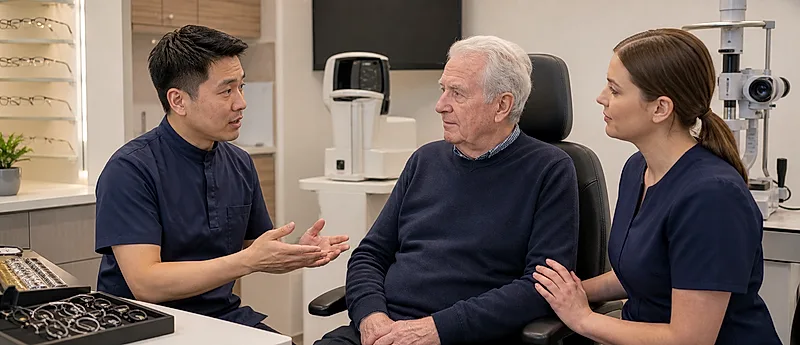
Welcome - and thank you for joining this focused course on safeguarding adults within optical practice. This programme is designed to equip optical registrants and their teams with the knowledge, practical skills and local-action tools needed to identify credible risk, support adults' autonomy and safety, and act lawfully and proportionately under GOC Standard 11.
Why this matters in optical practice Safeguarding is central to safe, professional care and public trust. Optical teams encounter adults who may be vulnerable because of frailty, cognitive impairment, illness, social isolation, coercion or financial control. Risks can present as missed clinical care (e.g. untreated glaucoma), coercion over consent or purchases, environmental concerns during home visits, and organisational failures in care settings. Embedding safeguarding in everyday practice protects life, autonomy and the therapeutic relationship.
What you will learn
- The core duty under GOC Standard 11 and how safeguarding should be embedded in routine optical care.
- The legal and regulatory backdrop: Care Act 2014 principles, Mental Capacity Act 2005 decision-making, and lawful information sharing under UK GDPR/Data Protection Act 2018.
- How to spot optical "red flags" for abuse, neglect, coercion and modern slavery.
- Practical first-response steps in clinic and on domiciliary visits: listen, offer private time, record verbatim, assess safety and escalate.
- How to carry out a focused capacity assessment using the functional test (understand, retain, use/weigh, communicate).
- When and how to share information lawfully - seeking consent where safe and documenting lawful bases when sharing without consent.
- Safe domiciliary and lone-working practice: pre-visit checks, check-in systems, and withdrawal plans.
- Clear escalation routes, referral content, and multi-agency working with local authorities, police and SABs.
- Governance, audit and staff training to sustain effective safeguarding and comply with regulatory expectations.
Safeguarding is "with" the adult, not "to" them. This course gives practical, clinic-ready actions - from a quick red-flag checklist to wording for contemporaneous notes and escalation templates - so you can protect adults while respecting choice and dignity.
How this course will help you and your team
- Increase confidence to recognise and respond to signs of abuse and neglect encountered in practice or on home visits.
- Improve decision-making about capacity and best-interest actions with clear, evidence-based steps you can document.
- Reduce risk by adopting simple, auditable recording practices and lawful information-sharing approaches.
- Strengthen solo and team safety through pre-visit planning, lone-working protocols and escalation pathways.
- Support practice governance with templates, role clarity (safeguarding lead/deputy), training matrices and audit prompts to meet regulatory expectations.
- Provide practical scenarios and short, ideal responses you can apply immediately in clinic.
Who should take this course
- Optometrists, dispensing opticians and other GOC registrants.
- Reception, dispensing and domiciliary staff who have patient contact.
- Practice managers, safeguarding leads and clinical supervisors responsible for governance.
- Anyone involved in patient care where capacity, coercion, or environmental risk may affect safety.
Course features and format
- Case-based scenarios reflecting common optical presentations (e.g. lost spectacles, controlled companion, domiciliary visits).
- Practical checklists for first response, capacity assessment, information sharing and referrals.
- Downloadable pass notes and templates for contemporaneous record-keeping and referrals.
- Advice on local escalation routes, including when to contact safeguarding teams, police, CQC or modern slavery helplines.
- Prompts for practice-level governance: training schedules, audit cycles and after-action learning.
We are pleased to have you with us. By the end of this course you will be better prepared to recognise credible risk, support adults' choices safely, act proportionately and lawfully, and document actions so multi-agency partners can protect the adult effectively. Begin when ready - your learning will make a real difference to the safety and dignity of the people you care for.
Sign up now for a free account
Course tools & details

