

Welcome to GOC Standard 2: Communicating Effectively with Patients in Optical Practice
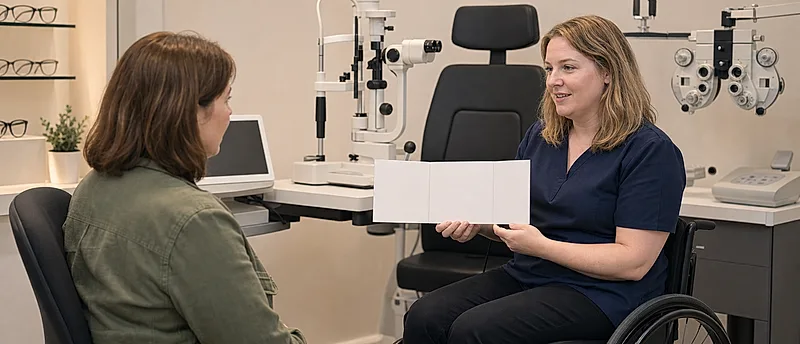
Welcome to this practical course designed to help optical registrants and practice teams meet the General Optical Council's Standard 2 through confident, patient‑centred consultations. Good communication is not optional - it underpins patient safety, builds trust and enables shared decision‑making. This course focuses on the everyday skills and documentation habits that reduce risk, improve adherence (to spectacles, contact lenses and referrals) and ensure you can demonstrate compliance with the GOC requirements.
What You Will Learn
- The essentials of GOC Standard 2: what it requires and how to demonstrate it in records.
- Core communication principles: clarity and accuracy, empathy, respect and active listening.
- How to balance clinical precision with plain language, useful analogies and visual aids.
- Practical verbal and non‑verbal techniques (tone, pace, posture, eye contact, silence).
- Methods to check understanding reliably - teach‑back, summaries and demonstrations.
- Adapting consultations for language differences, sensory impairments and neurodiversity.
- Managing difficult conversations: delivering unwelcome news, complaints and de‑escalation.
- Who to involve (carers, interpreters) and how to document involvement and consent.
- A concise consultation checklist to use before, during and at the close of appointments.
How This Course Will Help You
By the end of the course you will be able to:
- Conduct clearer, safer consultations that patients can understand and act on.
- Confidently adapt communication to individual needs and document those adjustments.
- Use teach‑back and visual aids to reduce misunderstandings and improve adherence.
- Manage emotionally charged or challenging interactions calmly and professionally.
- Produce consultation notes that reflect shared decision‑making and meet GOC expectations.
Clear communication is a patient safety measure. Make teach‑back, summarising and documentation routine parts of every consultation.
Key Skills You'll Practice
- Converting clinical jargon into everyday language and analogies (e.g., simple explanation of astigmatism).
- Using teach‑back prompts: "Can you tell me how you'll use these drops at home?"
- Positioning and body language: sitting at eye level, keeping your mouth visible for lip‑reading, facing the patient rather than the screen.
- Effective use of interpreters and carers while keeping the patient central.
- Writing concise, evidence‑based notes: what was said, patient responses, comprehension checks and follow‑up plans.
Who Should Take This Course
- Optometrists, dispensing opticians and optical assistants wanting to align practice with GOC Standard 2.
- Practice managers and clinical leads responsible for staff training and record keeping.
- Students and registrants preparing for revalidation or a competency assessment.
- Anyone seeking practical techniques to improve patient understanding and safety.
How to Use This Course
- Work through the modules and practical scenarios at your own pace.
- Apply the quick consultation checklist in real appointments and reflect on outcomes.
- Download the Exam Pass Notes and keep them for quick revision and CPD records.
- Use scenario exercises to practise teach‑back, summaries and handling difficult conversations - then document what you learned.
We're glad you've chosen to invest in this essential area of clinical practice. Clear, compassionate and documented communication protects patients and professionals alike - and this course will give you the practical tools to make it part of every consultation.
Sign up now for a free account
Course tools & details

