
When to Escalate a Patient Contact to a Clinician

Safe escalation boundaries for reception, care navigation and frontline admin contacts in general practice

  • Reputation

    No token earned yet.

    Reach 50 points to earn the Peridot (Trainee Level).

  • CPD Certificates

    Certificates

    You have CPD Certificates for 0 courses.

  • Exam Cup

    No cup earned yet.

    Average at least 80% in exams to earn the Bronze Cup.

Launch offer: Certificates are currently free when you create a free account and log in. Log in for free access

Recording exact words and safe handover
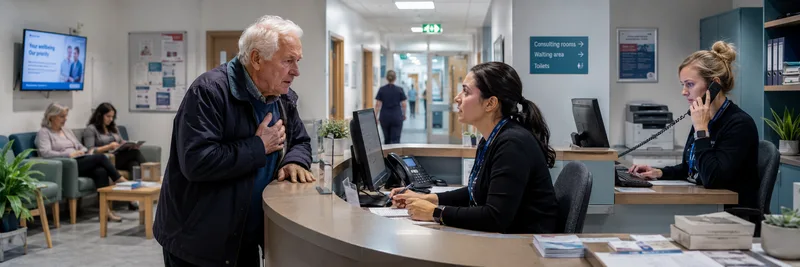
GP practice reception desk with staff and patient

Clear records and handovers help the next clinician or colleague understand why a contact was escalated. Vague notes can hide risk; factual entries make clinical responsibility and urgency visible.

The record does not need to be a long narrative. It should state what was said or observed, what action was taken, and who accepted responsibility for the next step.

What to record

  • Exact words: the patient, caller, carer or online request wording wherever possible.
  • Time and route: desk, phone, online request, message, third-party call or other route.
  • Location and contact details: where the patient is and how they can be called back safely.
  • Factual context: symptoms mentioned, relevant vulnerability, refusal, distress, disconnection or missing information.
  • Action and ownership: who was alerted, which route was used, and who accepted responsibility.

Make handover usable

A safe handover should be clear to someone who did not hear the original contact. For example: "Patient says they may not be safe to wait, refused to give details, at home, number confirmed, duty clinician interrupted at 10:12" is more useful than "wants urgent call".

Do not soften or rewrite the concern to make it neater. If new information appears later, add a dated factual update instead of obscuring the original wording.

Scenario

A caller refuses to say what the problem is but says they may not be safe to wait.

What should the record and handover include?

Why Documentation Matters – Catherine Gaulton

Video: 3m 37s · Creator: HIROC. YouTube Standard Licence.

This HIROC video features Catherine Gaulton discussing why healthcare documentation matters. Drawing on her background as a nurse and lawyer, she says documentation should make clear what happened to the patient and what the next person needs to know to continue care safely.

The video notes that good documentation also supports quality review and can be relevant in legal contexts, but the primary purpose is communication for care. If a record lets the next colleague understand what happened and what matters for the patient's care, it will usually meet legal scrutiny too.

Gaulton's practical advice is to tell the patient story succinctly. Records should capture what was happening, what was important, and what was done, without becoming a long narrative no one will read.

Was this video a good fit for this page?

If the contact sounded unsafe at first contact, the record should make that risk visible to the next person.


Ask Dr. Aiden


Rate this page


Course tools & details Study tools, course details, quality and recommendations
Funding & COI Media Credits
