

Asking enough without clinical triage
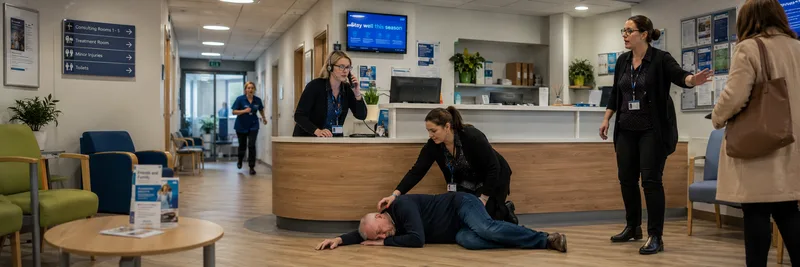
Safe escalation depends on a small set of clear facts. Reception staff can collect information that lets the practice follow its urgent pathway, but they must not interpret symptoms, assess severity or decide that urgent wording is unnecessary.
A factual question establishes what is happening, where the patient is and how to contact them if the line drops. Clinical triage would ask the receptionist to judge cause, seriousness or the safest clinical outcome. Local scripts should keep staff on the factual side of that line.
Factual questions may include
- "What words is the patient using to describe the problem?"
- "Is this happening now?"
- "Where is the patient at the moment?"
- "What is the safest number to call back on if the line drops?"
- "Has anyone already called 999, 111 or another urgent service?"
- "Is the patient alone?" if local protocol asks for this information.
Avoid drifting into clinical judgement
- Do not diagnose: avoid deciding that chest pain is anxiety, indigestion or muscular pain.
- Do not downgrade symptoms: avoid saying that breathlessness sounds mild or safe to wait.
- Do not give clinical reassurance: avoid telling the person that a clinician will call later if the wording suggests urgency now.
- Do not negotiate risk alone: if the patient refuses the suggested urgent route, escalate the refusal through the local process.
How to do the Primary Survey - First Aid Training - St John Ambulance
Video: 4m 3s · Creator: St John Ambulance. YouTube Standard Licence.
Was this video a good fit for this page?
Ask enough to make escalation safe, but do not turn factual information-gathering into clinical triage.
Ask Dr. Aiden
Rate this page
Sign up now for a free account
Course tools & details

