
Chest Pain, Breathing Problems and Collapse: Reception Awareness

Frontline awareness for recognising emergency symptoms and escalating without delay

  • Reputation

    No token earned yet.

    Reach 50 points to earn the Peridot (Trainee Level).

  • CPD Certificates

    Certificates

    You have CPD Certificates for 0 courses.

  • Exam Cup

    No cup earned yet.

    Average at least 80% in exams to earn the Bronze Cup.

Launch offer: Certificates are currently free when you create a free account and log in. Log in for free access

Understanding the risk at first contact
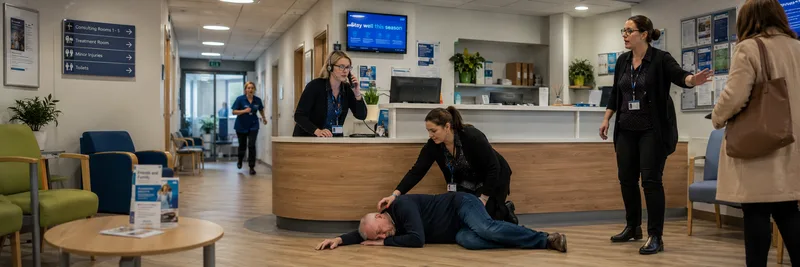
GP reception area with staff assisting collapsed patient

Before any clinical assessment, the safest response is to recognise when a contact could be urgent or unsafe. Chest pain, breathing problems and collapse are situations where routine processes may need to stop so a clinician or emergency service can take over.

Reception staff do not need to decide the cause of symptoms. A caller with chest pain might be having a heart attack, indigestion, a panic attack or something else. The task at first contact is to spot wording that suggests the situation is too risky for routine handling.

What makes first contact risky

  • The patient has not yet been assessed: there may be little reliable clinical information.
  • The caller may minimise danger: people sometimes request a GP call-back when emergency help is needed.
  • Symptoms may be changing quickly: worsening breathlessness, collapse or drowsiness can make waiting unsafe.
  • Online requests may hide urgency: a serious symptom can sit in a routine administrative queue.
  • Pressure can distort judgement: embarrassment, demand, conflict or a full appointment list can distract from safety.

Keep the question practical

The practical question is not "What is the diagnosis?" It is "Can this safely be handled as routine?" If the answer is no, or you are unsure, follow the local escalation route.

Useful first-contact information includes the patient's exact words, the patient's location, a safe contact number, whether symptoms are happening now, and whether anyone has already called 999, 111 or another urgent service.

Scenario

A caller says the patient has heavy chest pain and feels sick but wants a GP call-back.

What should the receptionist recognise?

Heart attack signs and symptoms | NHS

Video: 1m 51s · Creator: NHS. YouTube Standard Licence.

This NHS video explains that a heart attack is a life-threatening emergency and advises calling 999 immediately if someone may be having one. It identifies chest pain as the most common symptom but notes symptoms vary between people.

The video describes chest pain that may feel like pressure, heaviness, tightness or squeezing across the chest. It lists other possible symptoms, including pain spreading from the chest to the arms, jaw, neck, back or tummy; light-headedness or dizziness; shortness of breath; sweating; feeling or being sick; coughing or wheezing; and a sense of unease or anxiety.

It warns that heart attack symptoms do not always look severe, can feel like indigestion, may involve only minor chest pain, and may sometimes occur without chest pain. The key message is that it is never too early to call 999, the caller is not wasting NHS time, and acting faster improves the chance of successful treatment.

Was this video a good fit for this page?

First-contact safety is about recognising when routine handling is unsafe, not deciding what the symptom means clinically.


Ask Dr. Aiden


Rate this page


Course tools & details Study tools, course details, quality and recommendations
Funding & COI Media Credits
