

Welcome
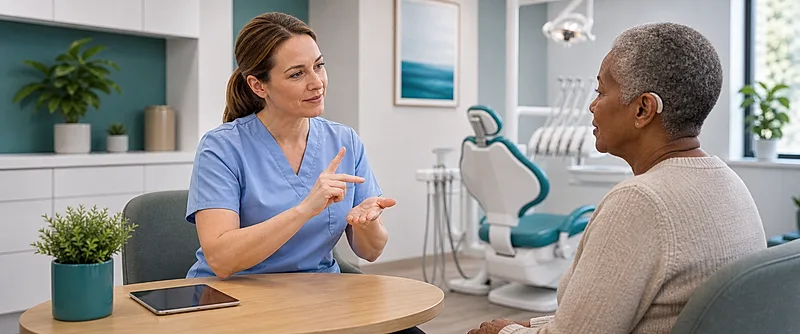
Deaf awareness in dental practice means ensuring Deaf and hard-of-hearing patients can understand information, ask questions, give informed consent, follow aftercare, and be treated with respect. Communication barriers can affect many parts of an appointment: taking medical history, checking pain, explaining treatment and radiographs, discussing payment, and giving post-operative instructions.
This course is for dental nurses working in UK dental settings. It focuses on practical actions you can take before, during and after appointments: asking about communication preferences, providing visual and written information, recognising when an interpreter is needed, improving the surgery environment, recording needs clearly, and raising concerns when a patient has not understood or been included.
Why This Course Matters
- Communication is safety-critical: misunderstanding can affect consent, anxiety, medicines, aftercare and complaints.
- Patients vary: some use BSL, some lip-read, some use hearing aids, some prefer written information; many use more than one method.
- Dental nurses notice details: you may see when a patient has not heard, is watching faces closely, is excluded by a relative, or is missing information.
- Small changes matter: lighting, eye contact, reduced noise, brief written points and clear records make care more accessible.
How This Course Will Help You
By the end of the course you should be better able to support Deaf and hard-of-hearing patients with dignity, help your team apply reasonable adjustments, and raise concerns when communication is unsafe or incomplete.
A Simple Learner Spine
- Ask: find out how the patient prefers to communicate.
- Adapt: use the appropriate mix of clear speech, visual aids, written information, BSL support or assistive technology.
- Check: do not assume nodding means understanding.
- Record: make communication needs visible for the next appointment.
- Speak up: raise concerns when a patient may be excluded from their own care.
Rate this page
Sign up now for a free account
Course tools & details

