

Welcome
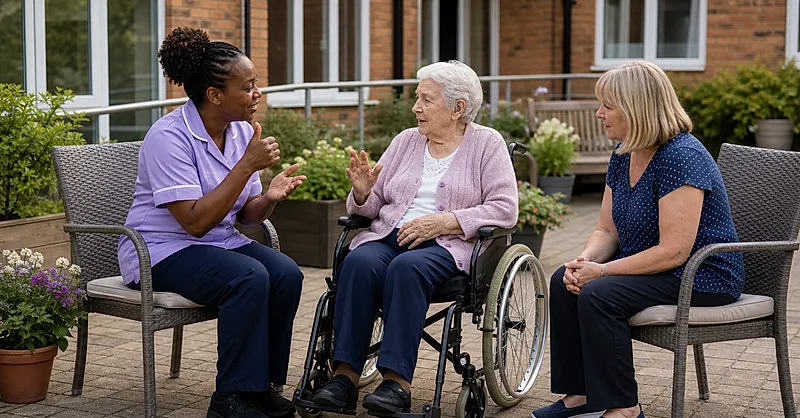
Deaf awareness matters in residential care because communication is central to everyday tasks. Residents need clear information during personal care, medicines support, meals, activities, appointments, risk discussions, and social contact. If hearing loss or deafness is not supported, people can become isolated, miss important information, appear confused, or be labelled as non-compliant.
This course is for care assistants, senior carers, support workers, team leaders, supervisors and other frontline staff in residential and nursing homes and similar adult social care settings. It focuses on practical habits that help across the UK: asking how someone communicates, making information accessible, protecting hearing aids, recording what works, and escalating concerns when support is lacking. Where helpful, England-specific standards such as the Accessible Information Standard and CQC expectations are noted, with signposting for Wales, Scotland and Northern Ireland.
Why This Course Matters
- Communicate more safely: adapt everyday care conversations so residents can follow, consent and ask questions.
- Avoid assumptions: recognise that deaf people and those with hearing loss use different communication methods.
- Protect hearing aids and communication equipment: learn common hearing-aid types, basic care routines and how devices can be lost in washing or bedding changes.
- Record and escalate properly: identify communication needs, share effective approaches with the team, and act when hearing changes, repeated device problems or denied access to aids occur.
How This Course Will Help You
On completion you will be better able to communicate respectfully with deaf and hard of hearing residents, support hearing-aid use safely, reduce avoidable barriers in daily care, and recognise when hearing issues require care planning changes, clinical review, audiology input or safeguarding action.
Rate this page
Sign up now for a free account
Course tools & details

