

Patterns, indicators and safe-contact clues
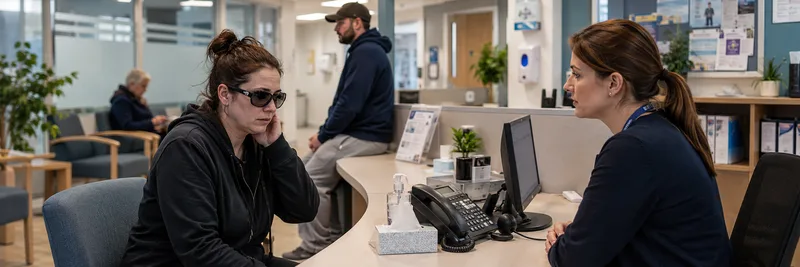
Coercive control usually shows as a series of behaviours rather than a single disclosure. Reception and admin staff may notice this from appointment patterns, contact preferences, proxy requests, messages and repeated calls over time.
Signs of Domestic Violence | NHS
Patterns that may matter
A single missed appointment or a single request not to text can have many causes. Concern increases when details cluster around control, fear, isolation or restricted access. Staff should not dismiss low-level clues simply because each one seems minor on its own.
- Contact restrictions: repeated requests to avoid texts, letters, voicemail, app notifications or calls to a shared phone.
- Third-party pressure: a partner repeatedly asking what the patient booked, attended, said or received.
- Loss of privacy: someone always speaks for the patient, attends every appointment, or refuses to leave the room.
- Changed behaviour: the patient becomes withdrawn, frightened, unusually apologetic, or cancels when asked to attend alone.
- Health access control: contraception, pregnancy, mental health, injury or safeguarding appointments are blocked, delayed or monitored.
Safe-contact clues
Information about how a patient can be contacted may itself be safeguarding information. If a patient says their phone is checked, letters are opened, the app is monitored or someone else controls transport, record that carefully and make it visible to staff who need to know, following local process.
Do not assume a communication route is safe because it is convenient. A mobile number, email, postal address, online account or proxy arrangement can be controlled by someone else.
Connect separate contacts
Different staff may each observe part of a pattern: a receptionist hears "do not text", an administrator sees repeated cancellations and a clinician notes the partner answering all questions. A safe system lets these details be brought together and reviewed by the safeguarding lead or an appropriate clinician.
Safe-contact information can be safeguarding information; treat it carefully and keep it visible to the right staff.
Ask Dr. Aiden
Rate this page
Sign up now for a free account
Course tools & details

