

Privacy, safe enquiry and avoiding increased risk
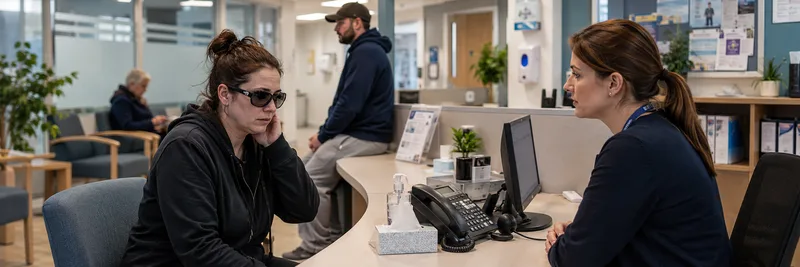
Privacy is more than politeness in domestic abuse work. Asking about fear or control in the wrong place or with the wrong people present can increase risk if an abuser can hear, see or later check what was said.
Check whether it is safe to ask more
Before asking about safety, consider who is present, whether the call or message is private, and if the patient has said contact is being monitored. Sensitive questions at an open desk, on a shared phone or in a visible online message may put the patient at greater risk.
- At the desk: avoid sensitive questions while a partner, relative or carer is close enough to hear.
- On the phone: do not assume the patient is alone; someone may be nearby or listening.
- Online: the account may be monitored, shared or accessed by proxy.
- By text or voicemail: messages may be read by someone else or appear on a locked screen.
Use ordinary reasons for privacy
When possible, use routine practice reasons to create privacy. For example: "The clinician usually speaks to patients alone for this part," or "We need to check some details privately." Follow local policy rather than improvising in a tense moment.
If you cannot achieve privacy safely, do not force the issue at the desk or with a possible abuser present. Preserve the information already given, avoid alerting the other person, and seek advice from the safeguarding lead or clinician.
Safe enquiry is not investigation
Reception staff may need to ask practical questions such as "Is it safe for us to call you?" or "Are you in immediate danger now?" They must not probe for a detailed abuse history, challenge the alleged abuser, or attempt specialist risk assessment unless trained and authorised.
Improving the primary care response to domestic violence and abuse (DVA)
Do not ask sensitive domestic abuse questions unless it is safe enough for the patient to answer.
Ask Dr. Aiden
Rate this page
Sign up now for a free account
Course tools & details

