

Cleaning the environment safely
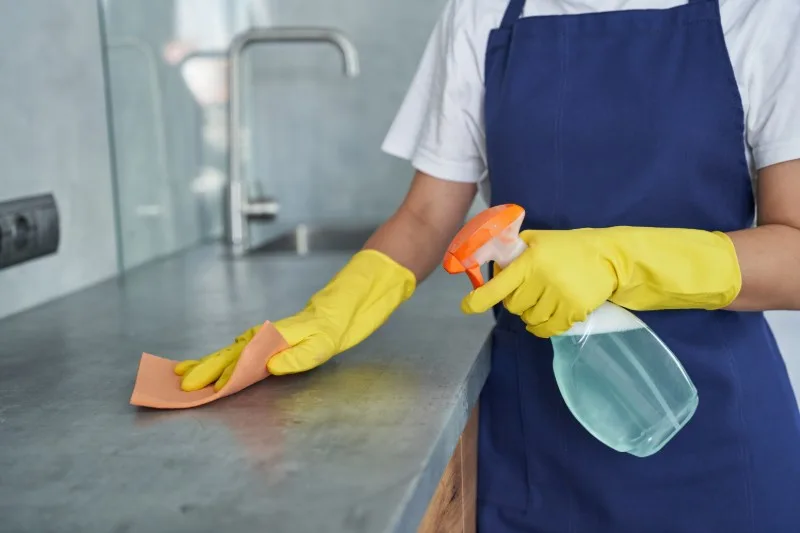
The care environment must be visibly clean, well maintained and arranged so it can be cleaned effectively. NHS England's NIPCM for England says areas should be free from non-essential clutter and that staff groups must know cleaning schedules and responsibilities. In care homes this includes bedrooms, bathrooms, lounges, dining tables, handrails, light switches, door handles, remote controls and shared toilets.
P.1 Cleanliness and Decontamination
What good environmental cleaning depends on
- Clear responsibility: staff should know who cleans which areas and equipment.
- Clear frequency: high-touch surfaces need more attention than low-risk areas.
- Correct products: use locally approved products and follow manufacturer instructions and COSHH arrangements.
- Cross-contamination prevention: for example colour coding of cloths or mops where used locally.
- Good housekeeping: clutter, damaged surfaces, and poor storage make effective cleaning harder.
- Ventilation: fresh air in shared spaces helps reduce respiratory infection risk where it can be provided safely.
Routine cleaning is not guesswork
NHS England's NIPCM says routine cleaning should follow agreed standards and local risk assessment, usually using a fresh solution of neutral detergent and warm water or approved detergent wipes. Routine disinfection is not required for every low-risk surface; some fittings, outbreak situations or local policies may require disinfectant. Staff must not improvise with unlabelled spray bottles, mixed chemicals or products used outside their instructions.
HSE guidance is also relevant. Cleaning chemicals can harm skin, eyes and lungs if used incorrectly, so safe storage, correct dilution, adequate ventilation, suitable PPE and hand care are part of routine practice.
Safe environmental cleaning depends on clear schedules, the right product, the right method and good housekeeping. Unclear responsibility and improvised product use create avoidable infection risk.
Ask Dr. Aiden
Rate this page
Sign up now for a free account
Course tools & details

