

Space, bystanders and waiting-room safety
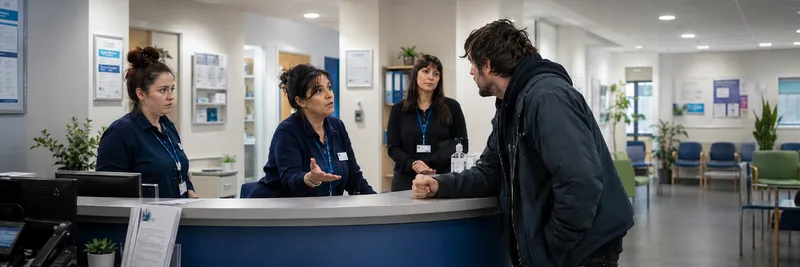
Aggression at reception affects more than the staff member involved. Other patients, children, carers and colleagues can feel frightened, intervene or be put at risk.
Think about the whole space
Waiting rooms can increase conflict. An angry person who feels watched may become more embarrassed or confrontational. Others in the room may comment, film, intervene or react. Children may be present. Staff can be blocked behind desks or find it hard to leave quickly.
Private spaces reduce exposure, but only if they remain safe. Moving an agitated person into an isolated room without a colleague nearby can raise the risk.
Practical safety checks
- Exits: keep staff access to an exit or help route where possible.
- Visibility: do not isolate yourself if risk is rising.
- Bystanders: consider moving vulnerable patients away or asking colleagues to support the room.
- Recording: follow policy for CCTV, incident notes and witness details.
Think about other patients
Other patients include children, frail adults, people with trauma histories or those waiting for sensitive care. If an incident becomes loud or threatening, the practice may need to move people away, pause check-in, or ask a colleague to watch the room. Safety planning should cover everyone present.
Use colleagues deliberately
A nearby colleague can act as a witness, provide practical support and offer a calm second voice. Their presence alone can reduce the sense that a single staff member is isolated.
Lone Workers
Privacy should reduce risk, not move risk into a hidden space.
Ask Dr. Aiden
Rate this page
Sign up now for a free account
Course tools & details

