

Welcome
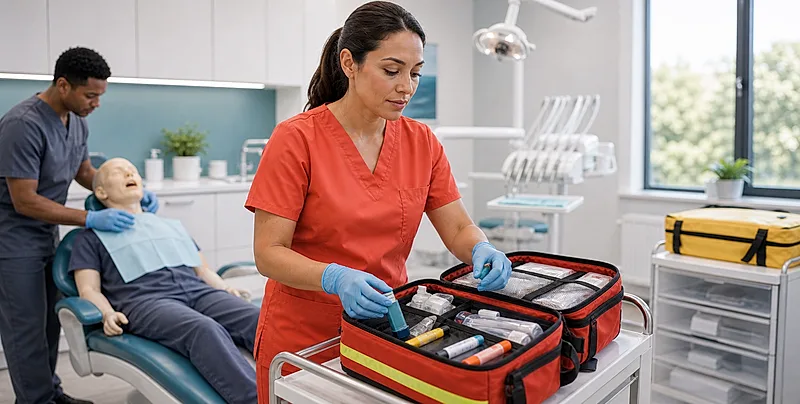
Non-cardiac medical emergencies can occur suddenly in dental practice: fainting after an injection, breathing difficulty, allergic reaction, seizure, hypoglycaemia, adrenal crisis, choking, or a patient who appears significantly more unwell than expected.
This course is for dental nurses working in general practice, specialist clinics, community dentistry, sedation settings, urgent care and reception-cover roles. It concentrates on recognising deterioration, immediate team actions, the use of emergency drugs and equipment, accurate records, debriefing and when to escalate concerns about patient safety.
Why This Course Matters
- Dental nurses often see early signs: chairside position, reception contact and post-treatment care frequently reveal warning signs before others.
- Early actions change outcomes: stopping treatment, calling for help, assessing ABCDE, bringing the emergency kit and documenting times all affect patient care.
- Clear role allocation saves time: predefined roles - lead, caller, kit runner, recorder, oxygen lead and ambulance guide - prevent confusion during an emergency.
- Speaking up is clinical duty: if a patient is not improving, equipment is absent or a concern is dismissed, dental nurses must escalate promptly.
How This Course Will Help You
The course follows a practical non-cardiac emergency pathway: preparedness and first assessment, then syncope, allergy and anaphylaxis, asthma, seizures, diabetic emergencies, adrenal crisis, recordkeeping, debriefing and practice learning. It is designed to support hands-on medical emergencies training and does not replace formal BLS or emergency-drug practice sessions.
Rate this page
Sign up now for a free account
Course tools & details

