

Urgent escalation and not managing risk alone
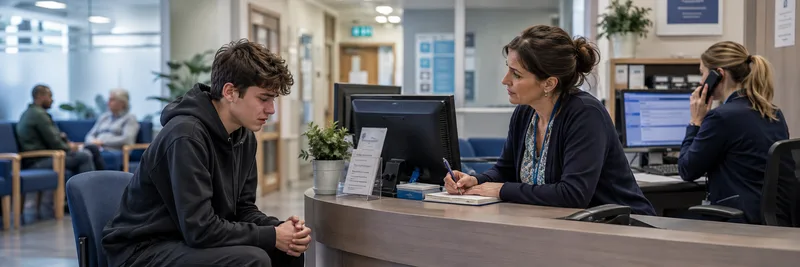
If someone may have harmed themselves, taken an overdose, has a plan or intent, has access to means, is severely agitated or is unable to stay safe, escalate urgently.
What urgent escalation may involve
The correct action follows local process and the immediacy of danger. Reception staff should not be forced to make the clinical decision alone. Local protocols must specify who can be interrupted, when to call emergency services, how to use local crisis routes and what to do if the patient disconnects.
- Duty GP or duty clinician for urgent clinical ownership during opening hours.
- Practice urgent protocol or same-day crisis process where this exists locally.
- NHS 111 or local crisis line when protocol directs this route.
- 999 or emergency services for immediate danger, overdose, serious injury or inability to keep the person safe.
- Safeguarding route where children, adults at risk, abuse, neglect or exploitation may be involved.
Full appointment lists do not change the response
A full duty list, a busy phone queue or closing time must not turn urgent self-harm or suicide-risk wording into routine administration. If the contact suggests immediate or serious harm, staff need a way to interrupt normal workflow.
If the person refuses a suggested urgent route, disconnects, gives limited information or cannot be reached again, follow the failed-contact and urgent-risk procedure. Record what happened and who was informed.
Do not carry the risk alone
Reception staff should not be left to decide whether someone is safe, whether an overdose is serious, whether a plan is credible or whether police or ambulance involvement is needed. Escalate the concern and ensure an identifiable clinician takes ownership of the next step.
Never leave an urgent self-harm or suicide-risk contact as routine administration because the appointment list is full.
Ask Dr. Aiden
Rate this page
Sign up now for a free account
Course tools & details

