
Self-Harm, Suicide Risk and Immediate Safety in Children's Homes (Level 2)

Recognising distress, responding calmly and escalating urgent risk in residential child care

  • Reputation

    No token earned yet.

    Reach 50 points to earn the Peridot (Trainee Level).

  • CPD Certificates

    Certificates

    You have CPD Certificates for 0 courses.

  • Exam Cup

    No cup earned yet.

    Average at least 80% in exams to earn the Bronze Cup.

Launch offer: Certificates are currently free when you create a free account and log in. Log in for free access

Supporting recovery without shame, panic or punishment
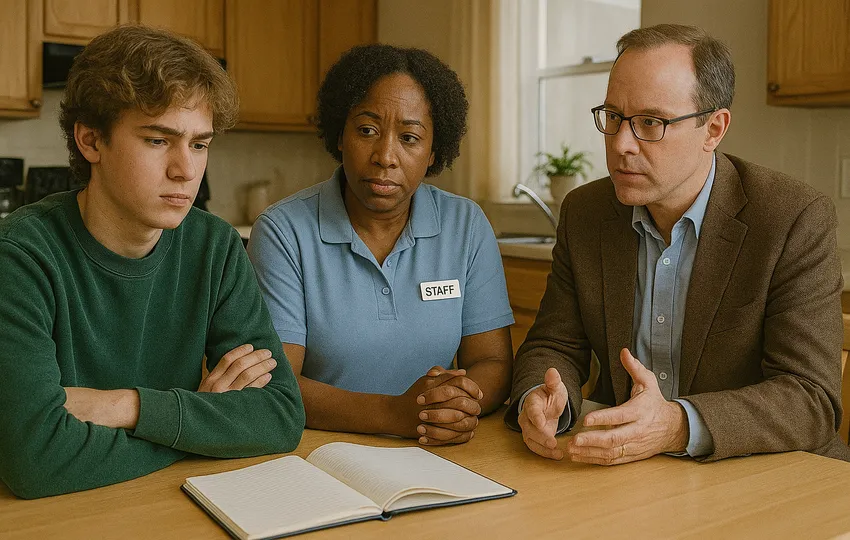
Teenager and two adults seated at table

Once immediate danger is addressed, the next task is helping the child feel safe enough to stay connected. Children who self-harm often expect anger, blame or loss of control; a shaming response can stop future disclosure and push the behaviour into secrecy.

Compassion does not mean ignoring boundaries. Staff should be kind, clear, honest and consistent. Do not promise secrecy, minimise the concern or leave the child to manage when the risk remains active.

What not to do if a child is self harming

Video: 5m 55s · Creator: Pooky Knightsmith: Neurodivergence & Mental Health. YouTube Standard Licence.

This Pooky Knightsmith video gives practical advice on what not to do when a child discloses self-harm. It begins by emphasising the need to withhold judgement, since fear of being judged often prevents young people from speaking up.

The guidance cautions against ordering the young person to stop immediately, responding with panic, making the conversation about adult distress, or creating secrecy. Knightsmith notes that self-harm may be a coping strategy for feelings the young person cannot manage yet, so simply insisting they stop can drive the behaviour underground.

The video recommends a calm, curious, and supportive response that keeps communication open. Adults should listen, take the disclosure seriously, seek appropriate help and avoid actions that increase shame or reduce the chance of further talk.

Was this video a good fit for this page?

Support that helps more than it harms

  • Use calm language: avoid shock, disgust or lectures.
  • Protect dignity: keep discussion private and proportionate.
  • Stay connected: identify which adult the child can tolerate best right now.
  • Follow the agreed plan: supervision, check-ins and coping support should be consistent.
  • Avoid bargains and secrecy deals: do not trade silence for cooperation.
  • Think beyond the incident: what must change before tonight, not just what happened this afternoon.

Scenario

After disclosing that he has been self-harming for weeks, a young person is told he has lost his phone and all community time until further notice.

Why is this likely to make things worse?


Children are more likely to keep talking when adults respond with steadiness instead of shock or punishment.

Ask Dr. Aiden


Rate this page


Course tools & details Study tools, course details, quality and recommendations
Funding & COI Media Credits
