

Welcome
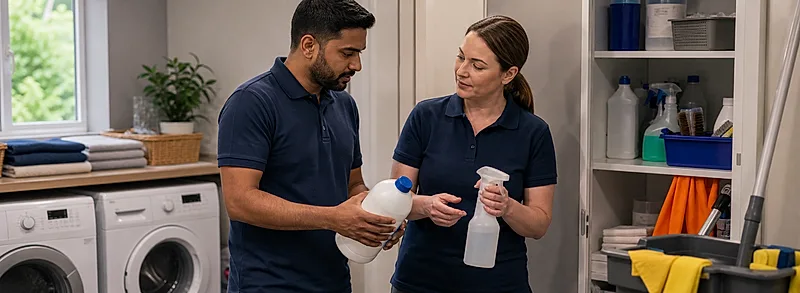
COSHH covers measures to prevent harm from hazardous substances at work. In children's homes this typically includes cleaning products, disinfectants, sprays, laundry chemicals, body fluids, contaminated items and poor storage. These everyday materials can burn skin, irritate lungs, damage eyes or worsen dermatitis when used or stored incorrectly.
This course is for residential child care workers, senior residential workers, waking night staff, team leaders, deputy managers, registered managers and other staff in children's homes and residential child care settings. It is a basic awareness course and does not replace local COSHH assessments, product-specific training or infection-control procedures.
The course refers to HSE COSHH guidance for Great Britain and signposts HSENI COSHH guidance for Northern Ireland. Always follow your local COSHH folder or system, local cleaning procedures and local infection-control arrangements.
Why This Course Matters
- Ordinary products can still harm: cleaning agents and sprays can injure skin, eyes and breathing.
- Labels and storage matter: many incidents happen because products are unlabelled, mixed or left accessible.
- Children's homes are living spaces: unsafe substances can put children and staff at risk.
- Skin problems build up: repeated wet work and glove use can damage hands if care is poor.
- Early reporting helps: sore skin, splashes and poor storage should be reported promptly.
A Simple COSHH Spine
- Know it: check labels and your local COSHH information.
- Use it safely: follow dilution instructions, ensure ventilation and use recommended gloves.
- Store it well: keep products secure and clearly identified.
- Do not improvise: never mix products or decant them casually.
- Report problems: record symptoms, splashes and shortcuts so they are addressed.
Rate this page
Sign up now for a free account
Course tools & details

