
COSHH for Children's Homes Staff

Safer use, storage and reporting of hazardous substances in residential child care

  • Reputation

    No token earned yet.

    Reach 50 points to earn the Peridot (Trainee Level).

  • CPD Certificates

    Certificates

    You have CPD Certificates for 0 courses.

  • Exam Cup

    No cup earned yet.

    Average at least 80% in exams to earn the Bronze Cup.

Launch offer: Certificates are currently free when you create a free account and log in. Log in for free access

What COSHH means in children's homes
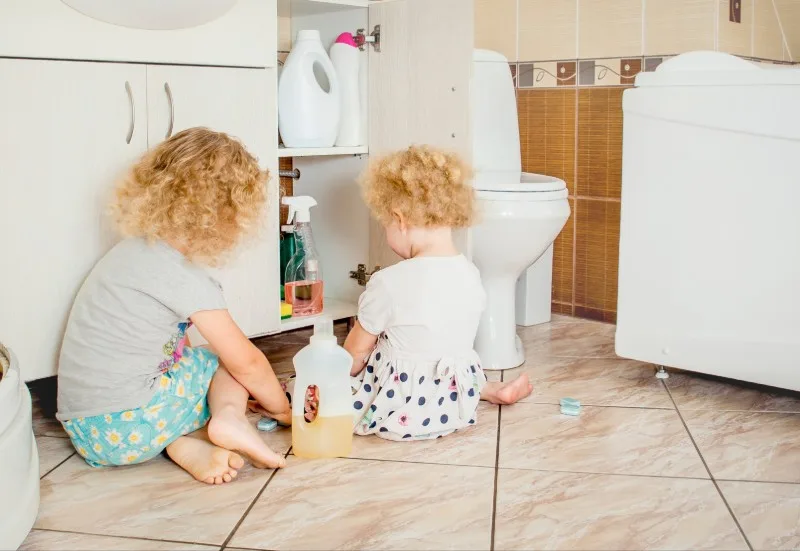
Two toddlers sitting on bathroom floor playing with bottles

COSHH stands for the Control of Substances Hazardous to Health. It covers substances at work that can harm health, including many chemicals and some biological agents. In children's homes this includes cleaning liquids and sprays, bathroom and kitchen cleaners, laundry products and contamination from body fluids or soiled items.

COSHH applies to everyday products as well as obvious chemicals. A familiar product can be hazardous if it is splashed, mixed incorrectly, inhaled in poor ventilation, or stored where a child can reach it.

Children's homes present extra risk because children may access products or be exposed during normal routines. COSHH assessment should consider who might be exposed, how often a product is used, whether children or visitors can reach it, and whether controls still work during busy periods.

The Hazards of Cleaning Chemicals

Video: 1m 47s · Creator: Ansell. YouTube Standard Licence.

This Ansell video outlines how routine exposure to cleaning chemicals can cause injury or illness in residential, commercial and industrial settings. It categorises cleaning products as detergents, sanitisers, disinfectants and sterilising agents, and explains that exposure can occur via inhalation, skin absorption, ingestion or injection.

Employers must reduce risk by choosing safer products, providing appropriate PPE, giving clear instructions and enforcing safe working practices. The examples focus on cleaning staff, but the advice applies to any worker using these products: breathing fumes, skin or eye contact, swallowing contamination from hands or food, or using products without proper controls can all cause harm.

Was this video a good fit for this page?

Common COSHH examples in a home

  • General cleaning sprays and liquids.
  • Bathroom and kitchen cleaners.
  • Laundry chemicals and pods.
  • Body-fluid contamination and soiled items.
  • Products used without clear labels or instructions.

Scenario

A worker says a product cannot be hazardous because the team uses it every day without thinking about it much.

Why is that poor COSHH thinking?


COSHH in children's homes is mostly about ordinary products used correctly, stored safely and never guessed at.

Ask Dr. Aiden


Rate this page


Course tools & details Study tools, course details, quality and recommendations
Funding & COI Media Credits
