

Dental Emergency Readiness and the Nurse Role
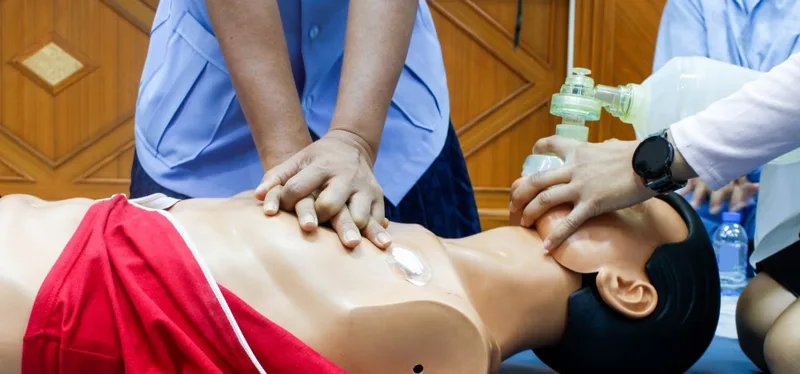
Effective emergency response requires more than CPR skills. The team must recognise deterioration, summon help, locate equipment, assign roles, and keep the patient safe while waiting for ambulance support.
Dental nurses are often central to these actions. You may be the first to notice a patient becoming pale, clammy, confused, breathless, or unresponsive. You may also know where the AED and oxygen are kept, check equipment, record times, fetch the emergency drug kit, or guide paramedics into the building.
What dental nurses should be ready to do
- Shout for help and call 999 or delegate the call clearly.
- Start CPR if the patient is unresponsive and not breathing normally.
- Bring and attach the AED as soon as possible.
- Support airway, oxygen, and ventilation equipment if trained.
- Record times, events, drugs given, AED prompts, and handover details.
- Speak up if equipment, access, roles, or training are unsafe.
When the practice is fully staffed, allocate roles before an emergency. Typical roles include a lead, compressor, AED runner, 999 caller, emergency kit runner, note-taker, patient-area clearer, and someone to meet arriving ambulance crews. In an actual collapse, the first trained registrant who can coordinate should do so until a more suitable lead takes over. The lead is not automatically the dentist.
In a dental emergency, leadership should follow training, competence, and the immediate situation. A trained dental nurse may be the safest person to coordinate the first actions until roles are clear.
Ask Dr. Aiden
Rate this page
Sign up now for a free account
Course tools & details

