

Welcome
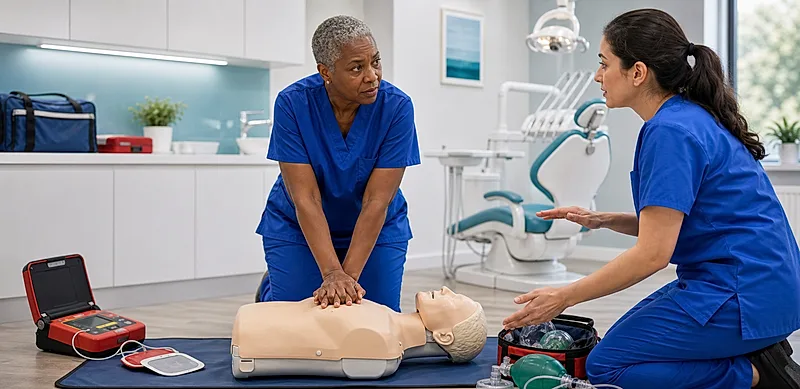
Cardiac emergencies are uncommon in dental practice, but the first minutes determine the outcome. Dental nurses may be the person at the chairside when someone collapses, at reception when a patient reports chest pain, or the team member who brings the AED, oxygen, emergency drugs, notes, or additional trained help to the surgery.
This course is for dental nurses working in general practice, specialist clinics, community dentistry, urgent care and training settings. It focuses on practical readiness: recognising collapse, starting basic life support, using an AED, supporting child and infant CPR, managing chest-pain emergencies and helping the team recover and learn afterwards.
Why This Course Matters
- Collapse needs action before certainty: abnormal or absent breathing should trigger the cardiac arrest pathway.
- Dental nurses are registered professionals: trained dental nurses can recognise danger, call 999, start CPR, use the AED, support airway devices, and speak up if roles are unclear.
- Role allocation saves time: when a team is present, assigned roles ensure compressions, AED use, oxygen, notes and ambulance access occur together.
- Paediatric readiness matters: a practice may need to respond to a child or infant collapse, including in the waiting room.
How This Course Will Help You
The course follows the emergency pathway from preparedness and recognition through adult BLS, child and infant CPR, emergency equipment, cardiac symptoms, records, debriefing and speaking up. It does not replace hands-on BLS training, but it should help you apply that training in routine dental practice.
Rate this page
Sign up now for a free account
Course tools & details

