
De-escalation Skills for GP Receptionists and Care Navigators

Practical de-escalation at the front desk and on the phone, including words, space, safety and reporting

  • Reputation

    No token earned yet.

    Reach 50 points to earn the Peridot (Trainee Level).

  • CPD Certificates

    Certificates

    You have CPD Certificates for 0 courses.

  • Exam Cup

    No cup earned yet.

    Average at least 80% in exams to earn the Bronze Cup.

Launch offer: Certificates are currently free when you create a free account and log in. Log in for free access

After the incident: records and reporting
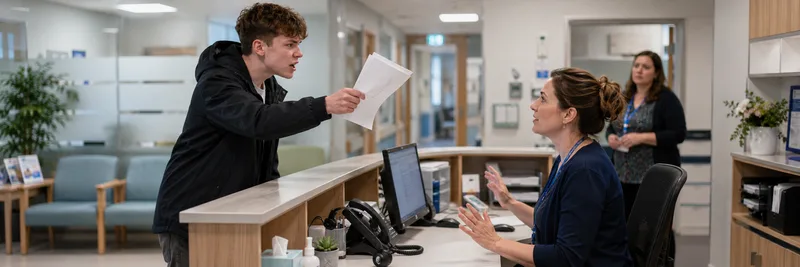
Young man arguing with female receptionist

After an escalation, recording what happened and reporting it protects staff, supports safe handover and highlights whether practice procedures need to change. Near misses are important because they can reveal risks before a serious incident occurs.

Record factual detail

Write records in factual, non-judgemental language. Use exact words when relevant. For example: "Patient shouted 'I will make you regret this' and hit desk with hand" is clearer than "patient was aggressive".

  • What happened, using factual wording and direct quotes where relevant
  • What risk was identified, such as a threat, blocked exit, severe distress or risk to bystanders
  • What de-escalation or limit was attempted
  • Who was informed and what action followed
  • Whether staff support or follow-up is needed

Use the right record route

Some details belong in the clinical record, some in an incident reporting system, and some in both. Follow local policy. The aim is to support safety and continuity, not to blame staff for asking for help.

Debrief and learn

Debriefing is not only for serious violence. A frightening phone call, a threat, racist abuse, sexual harassment or repeated intimidation can affect staff. Debrief should check wellbeing, note what worked, identify system triggers and agree any follow-up actions.

Scenario

After an incident, a colleague says there is no point reporting it because "nothing happened in the end".

Why might reporting still matter?


Why Documentation Matters – Catherine Gaulton

Video: 3m 37s · Creator: HIROC. YouTube Standard Licence.

This HIROC video features Catherine Gaulton explaining why healthcare documentation matters. Drawing on her experience as a nurse and lawyer, she emphasises that the main purpose of records is to make clear what happened and what the next person needs to know to continue care safely.

The video notes that good documentation supports quality review and can be important in legal situations, but the primary focus should be communication for care. If a record lets the next colleague understand what happened and what matters for the patient's care, it will generally be adequate for other purposes too.

Her practical advice is to tell the patient's story succinctly. Records should avoid long narratives that no one will read, while capturing what was happening, what was important and what was done to address it.

Was this video a good fit for this page?

Incident records should help future safety, not punish staff for needing support.

Ask Dr. Aiden


Rate this page


Course tools & details Study tools, course details, quality and recommendations
Funding & COI Media Credits
