
De-escalation Skills for GP Receptionists and Care Navigators

Practical de-escalation at the front desk and on the phone, including words, space, safety and reporting

  • Reputation

    No token earned yet.

    Reach 50 points to earn the Peridot (Trainee Level).

  • CPD Certificates

    Certificates

    You have CPD Certificates for 0 courses.

  • Exam Cup

    No cup earned yet.

    Average at least 80% in exams to earn the Bronze Cup.

Launch offer: Certificates are currently free when you create a free account and log in. Log in for free access

Choices, limits and realistic next steps
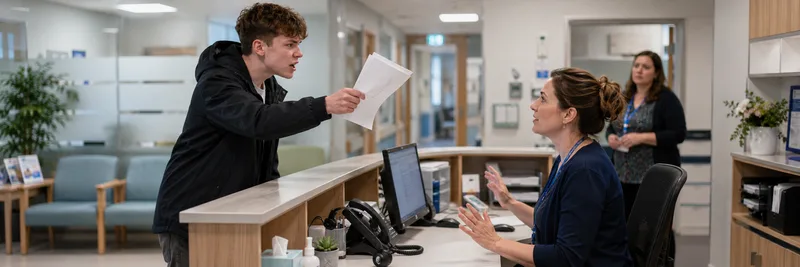
Young man arguing with female receptionist

Offering a small number of realistic choices can reduce escalation. Choices give the patient some control, but they must be genuine, safe and within the staff member's authority.

Offer real choices

A real choice is something the practice can actually deliver. Vague promises or "I'll see what I can do" when there is no option can increase anger later. Clear, specific options are usually more effective than open-ended discussion.

  • "We can use the call-back route or I can check the next routine slot."
  • "We can speak here briefly or use a quieter space with my colleague nearby."
  • "I can explain the complaints route after we deal with today's request."
  • "I can help if we speak without swearing."

Set behaviour limits early

Limits work best when stated calmly, linked to safety and easy to act on. Saying "You are being rude" sounds like a judgement; "I cannot continue while you are shouting at me" is clearer and tells the patient what will change.

  • Name the behaviour: shouting, swearing, threatening, leaning over the desk.
  • State the limit: what cannot continue.
  • Offer the condition for continuing: speaking calmly, stepping back, using the agreed route.
  • Know the next step: supervisor, pause, end call, alarm, incident process.

Do not bargain with safety

If a patient is threatening, violent or discriminatory, safety measures take priority over offering choices. Limits are ineffective unless the practice can follow through, so staff need to know what support is available.

Scenario

A patient rejects every appointment option and shouts, "So what are you going to do about it?"

How can choices and limits help?


If I die it will be your fault

Video: 2m 25s · Creator: IGPM (Institute of General Practice Management). YouTube Standard Licence.

This Institute of General Practice Management campaign video shows GP receptionists describing abuse they have experienced at work. It presents repeated blame, personal insults, pressure to bypass appointment or prescription processes, threats to attend the practice, discriminatory abuse, property damage and frightening behaviour.

The video shows that abuse can occur by phone and in person, and that it can target receptionists, clinicians and other team members. Examples include patients blaming staff for health outcomes, demanding a particular doctor or appointment, and using racist or threatening language.

The closing message is that abuse in GP practices must stop. The video is not a technical de-escalation guide; its value is showing the emotional and safety impact of normalising abusive behaviour towards primary care staff.

Was this video a good fit for this page?

Choices only de-escalate if they are real, safe and within your authority.

Ask Dr. Aiden


Rate this page


Course tools & details Study tools, course details, quality and recommendations
Funding & COI Media Credits
