

Space, privacy and safe positioning
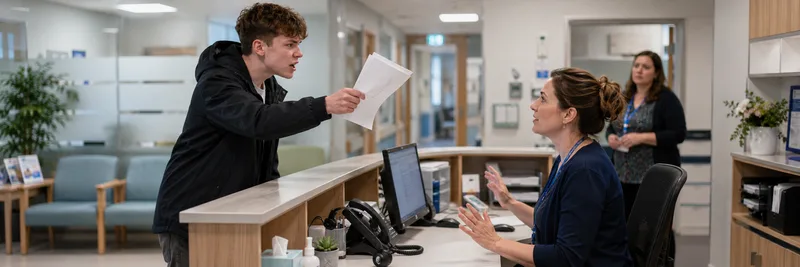
Physical layout and proximity affect safety. Crowded desks, public embarrassment, blocked exits or isolated rooms can increase risk. Privacy may calm someone, but only if it does not place staff at greater risk.
Use privacy carefully
If someone is embarrassed or upset, a quieter area can help them speak openly. Offer privacy only within your practice's safety rules.
- Use a safer private space where colleagues know where you are.
- Avoid isolated rooms if the person feels threatening or unpredictable.
- Keep an exit route available where possible.
- Ask for a colleague before moving away from the desk if risk is rising.
Watch the waiting room
Other patients can escalate a situation by staring, commenting or becoming anxious. If the waiting room is making things worse, call a supervisor or colleague to help manage the area.
Know the layout
De-escalation is safer when staff know where alarms, exits, phones, safer rooms and colleague support are located. Do not try to work out a safety plan during a confrontation.
Privacy should reduce risk, not move risk into a hidden room.
Ask Dr. Aiden
Rate this page
Sign up now for a free account
Course tools & details

