
De-escalation Skills for GP Receptionists and Care Navigators

Practical de-escalation at the front desk and on the phone, including words, space, safety and reporting

  • Reputation

    No token earned yet.

    Reach 50 points to earn the Peridot (Trainee Level).

  • CPD Certificates

    Certificates

    You have CPD Certificates for 0 courses.

  • Exam Cup

    No cup earned yet.

    Average at least 80% in exams to earn the Bronze Cup.

Launch offer: Certificates are currently free when you create a free account and log in. Log in for free access

Voice, body language and words that reduce heat
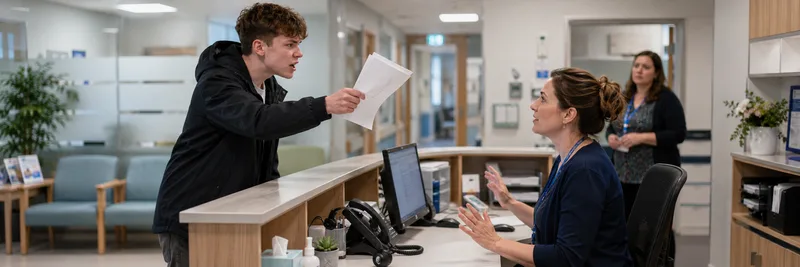
Young man arguing with female receptionist

Voice, body language and wording can calm a tense situation or make it worse. Aim for calm authority: respectful, clear and firm enough to guide the interaction without sounding dismissive or defensive.

Use a steady voice

When someone is upset, matching their volume or pace usually increases tension. A slower pace, lower volume and shorter sentences help the person follow what you say. This should feel steady, not cold.

  • Lower your volume rather than raising it
  • Use short sentences and avoid long explanations
  • Pause before replying if the conversation is moving too fast
  • Repeat the next step calmly rather than debating every complaint

Choose words that acknowledge and redirect

Acknowledgement is recognition, not agreement. Brief, practical phrases that point to the next step reduce escalation without promising unavailable outcomes.

  • "I can hear this is frustrating."
  • "I want to help with what can happen next."
  • "Let me check the safest route for today."
  • "I can continue if we speak without shouting."

Avoid adding fuel

  • Do not use sarcasm or humour that may sound mocking.
  • Do not blame another team member or argue about who is right.
  • Do not correct every detail publicly if it is not needed for safety.
  • Do not give long defensive explanations while the person is highly activated.

Scenario

A patient says, "You people never help." You are tempted to explain every pressure the practice is under.

What wording is more likely to reduce heat?


Using De escalation Skills in a Healthcare Setting

Video: 5m 48s · Creator: Chris Hart. YouTube Standard Licence.

This Chris Hart training film shows two versions of a healthcare de-escalation scene on a mental health ward. The first makes the situation worse: staff question the person's account too quickly, ask for proof, focus on whether the accusation is correct, tell the person to calm down, move into the person's space and touch them, and the patient becomes more angry and threatening.

The second version uses a calmer approach. The staff member slows the conversation, asks what happened, checks details without arguing, acknowledges the person's anger, offers a quieter place to talk, sits down first rather than forcing the patient to sit, and gives time to explain.

The exchange moves from accusation towards practical problem-solving. Staff explore what the missing phone means to the person, check for an immediate need to contact someone, reflect that returning from leave may have been difficult, and suggest looking carefully for the phone before confronting another person. The film contrasts environmental, non-verbal and verbal factors: pace, space, touch, tone, privacy, acknowledgement, practical questions and avoiding argument while someone is highly aroused.

Was this video a good fit for this page?

In a heated moment, short and clear usually works better than detailed explanation.

Ask Dr. Aiden


Rate this page


Course tools & details Study tools, course details, quality and recommendations
Funding & COI Media Credits
