

Welcome
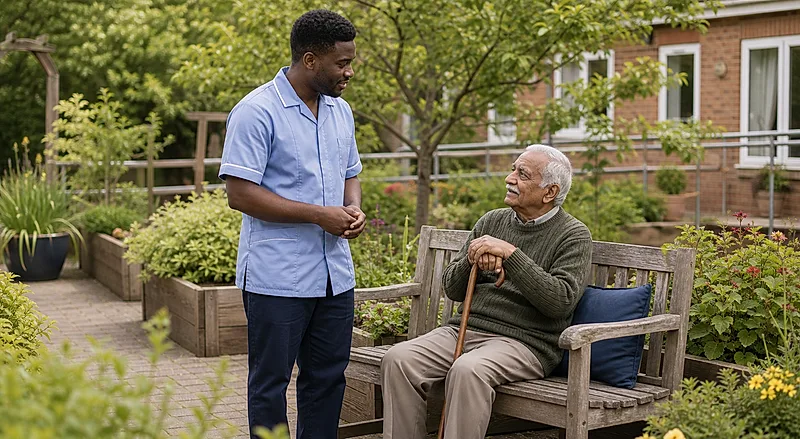
Dementia is one of the most important topics in adult social care. In many care homes and nursing homes, a large proportion of residents are living with dementia or significant memory and thinking difficulties. Staff who understand dementia better are more likely to provide calmer, safer, more person-centred care and less likely to mistake distress, confusion, or changed behaviour for simple non-cooperation.
This course is for care assistants, senior carers, support workers, team leaders, supervisors, and other frontline staff working in residential care homes, nursing homes, and other adult social care settings. It is a foundation course. It focuses on practical dementia awareness for day-to-day care rather than trying to cover every specialist aspect of advanced dementia practice in one course.
This is a UK-wide foundation course about practical, person-centred dementia care. It uses NICE, NHS, CQC, and Skills for Care material where useful, and it highlights the main points where local law, regulator expectations, or service frameworks differ across England, Wales, Scotland, and Northern Ireland.
Why This Course Matters
- Improve daily care: dementia affects communication, memory, routine, and understanding, so ordinary care tasks often need a different approach.
- Reduce avoidable distress: behaviour change is often a sign of unmet need, fear, pain, illness, or confusion rather than deliberate difficulty.
- Support dignity and identity: people living with dementia still need respect, choice, familiar routines, and meaningful relationships.
- Recognise health concerns earlier: sudden or severe changes may reflect delirium, infection, dehydration, constipation, pain, or other illness.
- Work more confidently with families and colleagues: good dementia care depends on communication, consistency, and timely escalation.
How This Course Will Help You
After completing this course, you should be better able to understand what dementia is, communicate more effectively, look beyond labels such as "challenging behaviour", support safer daily living, and recognise when a person's condition or care needs require escalation.
Rate this page
Sign up now for a free account
Course tools & details

