

Welcome
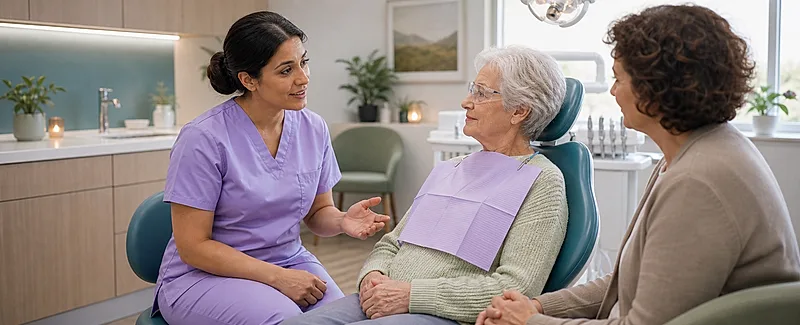
Dementia-friendly dentistry makes dental care easier to access, safer, and more respectful for people living with dementia. Dental nurses are central to this work because they are involved at every step of the patient journey: taking calls, managing the waiting room, assisting in the surgery, talking with carers, explaining aftercare, recording notes, and arranging follow-up appointments.
This course is aimed at dental nurses in general practice, community dental services, specialist clinics, and mixed NHS/private settings. It concentrates on practical steps you can take to support patients with dementia, guide colleagues, spot when systems are failing, and recommend small changes that reduce distress and improve care consistency.
Why This Course Matters
- Dementia can affect access: appointments, travel, waiting, following instructions, consent, daily oral hygiene, denture use, and aftercare can all become more difficult.
- Dental nurses notice the detail: confusion, distress, changed routines, carer pressure, and decline in oral health are often first seen by the nurse.
- Good preparation prevents avoidable distress: accurate records, predictable routines, calmer environments, and realistic appointment planning increase the chance of successful treatment.
- Advocacy improves systems: nurses can suggest practical practice changes that benefit future patients as well as the person being treated now.
How This Course Will Help You
The course follows a practical dental nurse pathway: recognising dementia-related changes, adapting communication and the clinical environment, supporting prevention and daily mouth care, working with carers and care homes, and raising concerns about capacity, consent, safeguarding, or practice systems when needed.
Rate this page
Sign up now for a free account
Course tools & details

