

Welcome
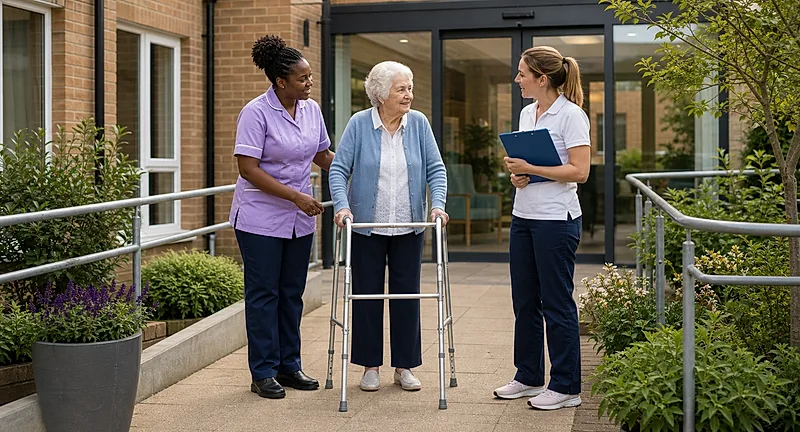
Falls prevention is part of daily care. It means noticing when someone becomes less steady, keeping walking aids and call bells within reach, making rooms and routes safer, helping people stay active, responding correctly after a fall, and escalating concerns before a near miss becomes an injury.
This course is for care assistants, senior carers, support workers, team leaders, supervisors, night staff and other frontline care staff in residential care homes, nursing homes, supported living and adult social care settings. It provides frontline awareness and practical safe-practice guidance. It does not replace local falls policy, post-fall procedure, clinical assessment, physiotherapy or occupational therapy input, or service-specific competency checks for lifting equipment.
This course is written for care staff across the UK. It uses NICE guideline NG249 and NICE quality standard QS86 as the primary clinical sources for falls assessment and prevention, with operational examples from NHS England and regulatory examples from CQC where they clarify practice in care homes. Staff in all four nations should follow employer policy, local referral and escalation routes, and nation-specific guidance where pathways or regulator expectations differ.
Why This Course Matters
- Falls are usually multi-factorial: a fall can involve mobility, footwear, medication, continence urgency, dehydration, dizziness, poor lighting, confusion, illness and environment together.
- Prevention should support independence: safer care means enabling movement where it is safe, not keeping people seated for convenience.
- A fall may be a warning sign: new confusion, infection, low blood pressure, medicine effects, pain or deterioration can present as near misses or falls.
- Good plans prevent repeat harm: reliable handover, clear care plans and timely review help staff act consistently across shifts.
- Post-fall response matters: lifting someone without checking for injury can increase harm.
How This Course Will Help You
By the end of the course you should be better able to recognise common falls risk factors, apply a person-centred and least-restrictive approach, support safer mobility and daily routines, respond safely after a fall, and record and escalate concerns so the service can learn.
A Simple Falls-Prevention Spine
- Notice change: new unsteadiness, rushing, dizziness, confusion, pain, reduced intake or reluctance to use an aid are all important.
- Check the basics: footwear, glasses, hearing aids, walking aids, lighting, route, call bell, hydration and toileting needs.
- Support safe movement: help people remain as active and independent as they can safely be.
- Record and hand over: report near misses, falls, patterns and new triggers so they are visible to the team.
- Escalate early: repeated falls, unwitnessed falls, suspected injury, new delirium or sudden deterioration require prompt senior or clinical review.
Rate this page
Sign up now for a free account
Course tools & details

