

Evacuation procedures in a pharmacy
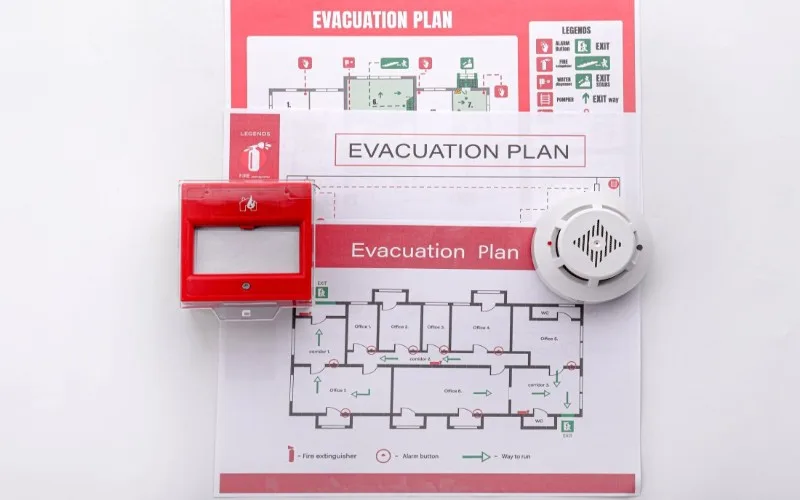
If a fire occurs, staff must evacuate the pharmacy quickly, calmly and safely. Pharmacy layouts can separate public areas, the dispensary, stock rooms and consultation rooms, and people on site may include patients, customers and anyone who needs extra help. Clear procedures reduce confusion and protect everyone on the premises.
Know exits, routes, and alarm points
All staff should be familiar with the pharmacy layout, the location of final exits, escape routes, fire alarm call points and the assembly point. This matters where the public area, dispensary, stock area and consultation room are separate, because people may need different guidance to reach safety.
- Know the nearest exit: staff should be aware of at least one alternative route in case the nearest route is blocked.
- Know how to raise the alarm: activate the alarm immediately if you discover a fire, following local procedure.
- Know the assembly point: staff, customers and visitors should gather at the designated place outside the building for a roll call.
Evacuating safely
When evacuating, stay calm and move promptly. Encourage customers and patients to leave by the nearest safe route. Do not delay evacuation to collect belongings, finish tasks or manage stock. Keep fire doors, exits and escape routes clear and usable at all times.
- Do not use lifts: use stairs or ground-floor exits as required by local fire procedures.
- Assist people who need help: older patients, wheelchair users, people with mobility difficulties and anyone who is unwell or distressed may need support to evacuate.
- Check key areas if this is your role: local procedures may assign staff to check toilets, consultation rooms or back rooms if it is safe to do so.
- Go straight to the assembly point: once outside, report in and help confirm who is accounted for.
Do not re-enter
After evacuation, no one should return inside unless the fire and rescue service confirms it is safe. Even a small fire or incorrect assumption about safety can be dangerous. Wait for instruction and follow the local emergency plan.
Safe evacuation depends on knowing exits, raising the alarm promptly, helping people leave calmly and following local fire procedures without delay.
Ask Dr. Aiden
Rate this page
Sign up now for a free account
Course tools & details

